

Vrsar
Cultural sights
Pregled: 1 - 13 od ukupno 13
-
...in the Harbour
Vrsar
The harbour was formed in the 19th century when a number of houses were built on the slope between the old town centre and the sea front. However, life has been going on in the bay of Vrsar since ancient times up to present days. In some medieval documents the area around the harbour of Vrsar was called "Fabian". In the period from the 12th to the 17th century here the saltworks and storehouses were standing that belonged to the Poreč bishopric.
-
Abandoned Stone Quarries
Vrsar
The ancient abandoned stone quarries should also be added up to the sights of Vrsar. In the Vrsar quarries the stone has been obtained ever since Roman times.
-
Roman Store-houses and Roman Necropolis
Vrsar
Several decades ago, in 1928. foundations of a large building about 70 metres long were excavated in the harbour of Vrsar.In Roman times Vrsar was an important trade centre and according to archaeologists' opinion these foundations belonged to Roman store-houses for merchandise (lat.horreum).
-
Romanesque Basilica of St. Mary of the Sea
Vrsar
In the Vrsar harbour there is a very interesting medieval monument: the Romanesque basilica of St. Mary of the Sea. The basilica represents an outstanding monument of the Romanesque architecture in Istria. Its history is long and curious. In Roman times some large building (maybe "villa rustica" - a country house with farm buildings) was standing on that place. The original and modest church of St. Mary was built on that spot in the early Middle Ages (second half of the 8th century). Between the 8th and the 12th century the original church was repeatedly reconstructed. Its present-day architectural and artistic appearance is dating from the 12th century.
-
Streets and Squares
Vrsar
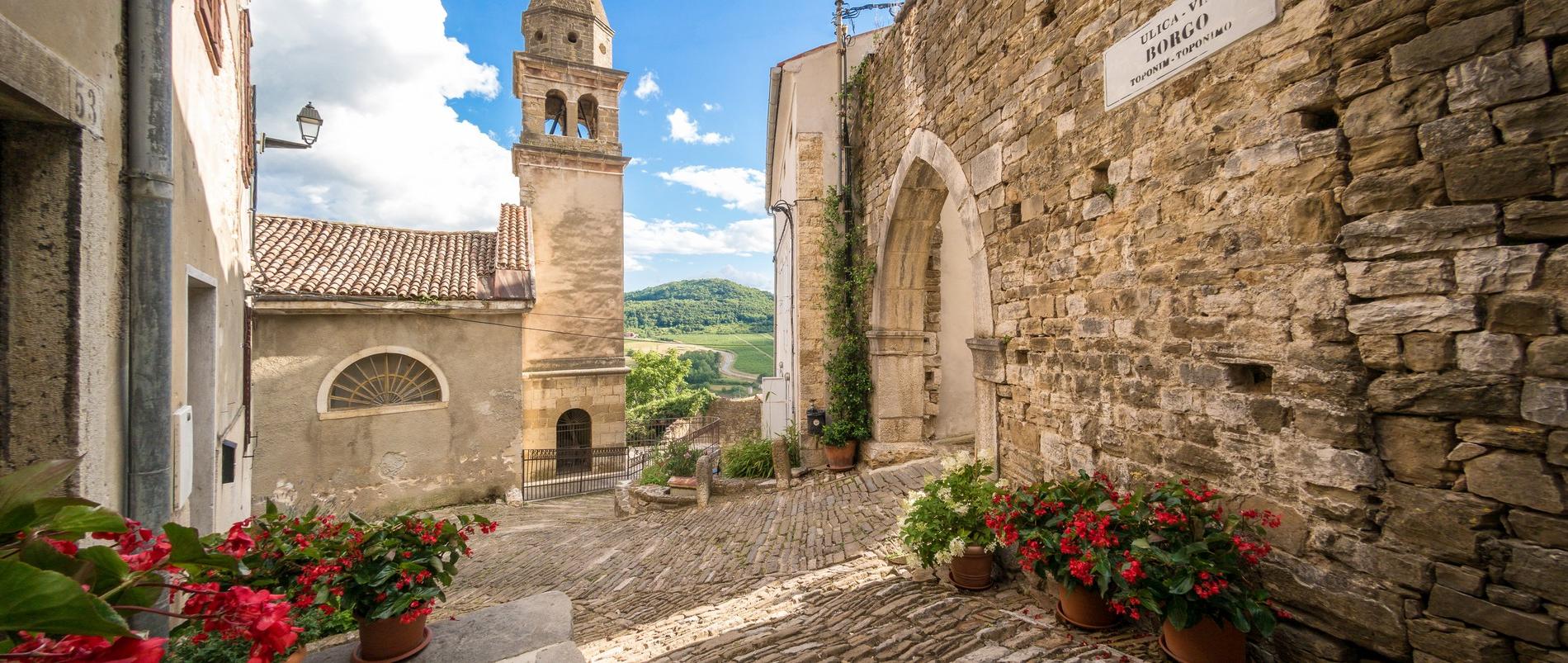
In the course of the past centuries narrow streets and small intimate squares developed inside the ancient walls. Interesting examples of residential architecture containing elements of different historic styles have been preserved till the present days. Old houses with intersting architectural details (courtyards, water-wells, staircases, doors, windows, balconies, chimmneys) are particularly attractive.
-
Summer Residence of the Poreč Bishops (Castle)
Vrsar
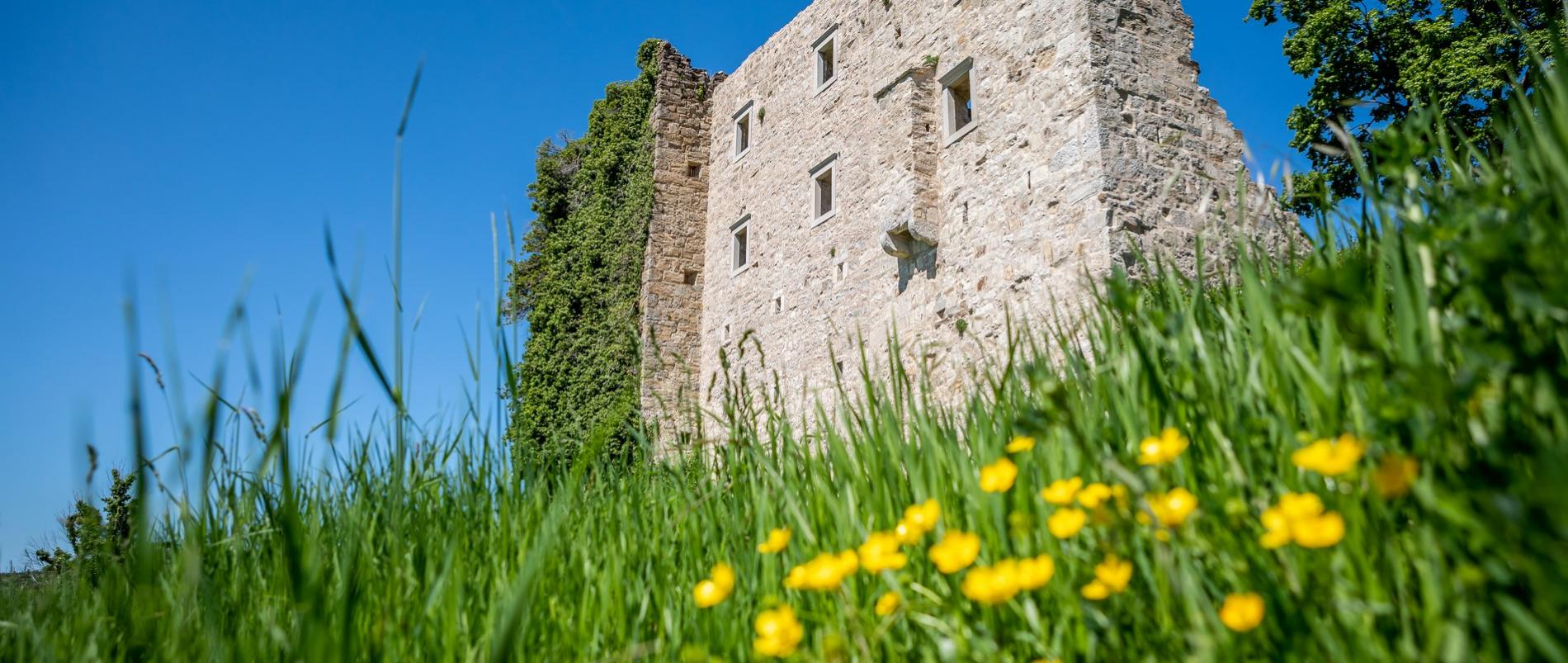
In the immediate vicinity of the parish church there is a monumental palace thet used to be the summer residence of the Poreč Bishops. On this strategic location the Poreč Bishops had at first built some modest Romanesque palace (12th/13th century). In the centuries to come the original palace was continuosly being reconstructed and enlarged. In fact, the conteporary palace arose after reconstructions of the original Romanesque castle in the period between the 14th and 18th century.
-
The Church of St. Anthony
Vrsar
Within the easy reach of the small town gate there is the church of St. Anthony of Padova dating from the second half of the 17th century and having characteristics of the Renaissance-Baroque style. The facade is quite simple. On the portal lintel there is an engraved text written in form of abbreviations (I.O.B.C.F.F.C.E.L.E.) and the year of construction (1656). On both sides of the rectangular portal there are two square windows with iron bars. Over the portal there is a small round window and on the south wall a semilunar one. Above the facade a simple belfry is standing formed like an arcade. Up to the requisition for war purposes in the belfry there was a small bell from 1657 richly decorated with images of St. Anthony. Holy Virgin and the Saints. On the top of the belfry there is a stone ball and an iron cross.
-
The Church of St. Fosca
Vrsar
This church, dating from the first half of the 17th century, s built in the style of the Renaissance, but has some Baroque elements too. The facade and the Renaissance portal are very plain. On both sides of the portal there are two windows provived with iron bars.
-
The Church of St. George
Vrsar
Off the harbour there is the islet of St. George on which a Romanesque church bearing the same name is standing. The church, which was renovated in 1995, has a rectangular ground-plan prolonged by an apse.
-
The Main Town Gate
Vrsar
Next to the church of St. Fosca there is the eastern, that is the main gate. In the past centuries this was the main entrance to the fortified town, which as late as in the 19th century began to expand down the hill slopes. (Until the 19th century there were only a few lonely houses or some church outside the walls).
-
The Old Christian Basilica
Vrsar
Next to the Romanesque basilica of St. Mary, in the walled-in backyard, there are remains (foundations and mosaic floor fragments) of the Old Christian basilica dating from the 4th century. Nowadays the remains of the basilica are covered with earth and are not accessible to the public.
-
The Old Romanesque Gate
Vrsar
Compared to the main medieval town gate in the eastern part of Vrsar. this gate is smaller, therefore it is called the small town gate. The gate was built in the second half of the 13th century, when the Romanesque style was prevailing in Istrian towns.
-
The Parish Church of St. Martin
Vrsar
The town wall with Romanesque gate were once passing througt the place where the parish church is standing nowadays. The history of its building is very long. The foundations were laid at the dawn of the 19th century (1804). During the French occupation (1805 – 1813) building was contuined, but then came a long pause. Between the years 1927 and 1935 (at the time when the patrish priest Josip Martinol was holding the offise) the construction was brought to the end. Accompanied by religious celebrations, the church was consecrated on March 19th, 1935 by the Poreč Bishop Trifun Pederzolli (Latin text in the church) in front of the church there is a flight of stairs.
Pregled: 1 - 13 od ukupno 13
контакт
????????????? ??????????Vrsar
Rade Končara 46
52450 Vrsar
T. +385 (0)52 441746,
+385 (0)52 441187
F. +385 (0)52 441187