

Saluga Beach
At the end of the 19th century, Paul Kupelwieser, an Austrian industrialist, purchased the Brijuni archipelago, captivated by its gentle wilderness and driven by a vision to create an elite tourist resort. With the assistance of skilled experts, he dedicated himself to taming the wild island and successfully developed it, capitalizing on its favourable climate and environment. He then focused on building the necessary infrastructure.
Running Water on the Island - A Landmark Event!
Veli Brijun became the first island in the Adriatic to be supplied with water from the mainland via an underwater pipeline in 1903—a full half-century before any other island! Thanks to this water supply, the construction of large hotels became feasible, meeting the demands for amenities necessary to accommodate an increasing number of foreign guests. A special ship was built for laying the pipes along the seabed of the Fažana Channel for this ambitious undertaking. The costs were immense due to maintenance and repairs, as incidents like ship anchors damaging pipes or the pipes corroding from seawater required repeated intervention.
A Seaside Resort for the Imperial Family
In 1905, the Saluga Seaside Resort opened, featuring a two-story building constructed according to the highest standards of the time. Although it was located only a seven-minute walk from the hotel, there was also a regular motorboat service from the Brijuni harbour to Saluga, reducing the journey to just three minutes for those who found the walk too long.
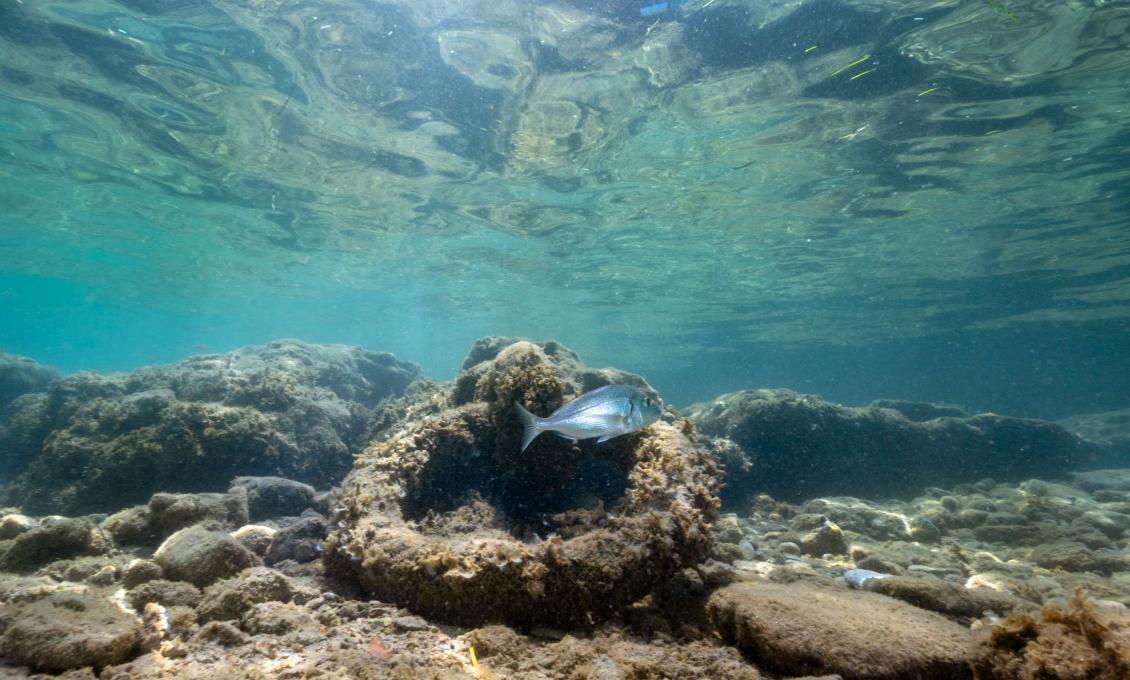
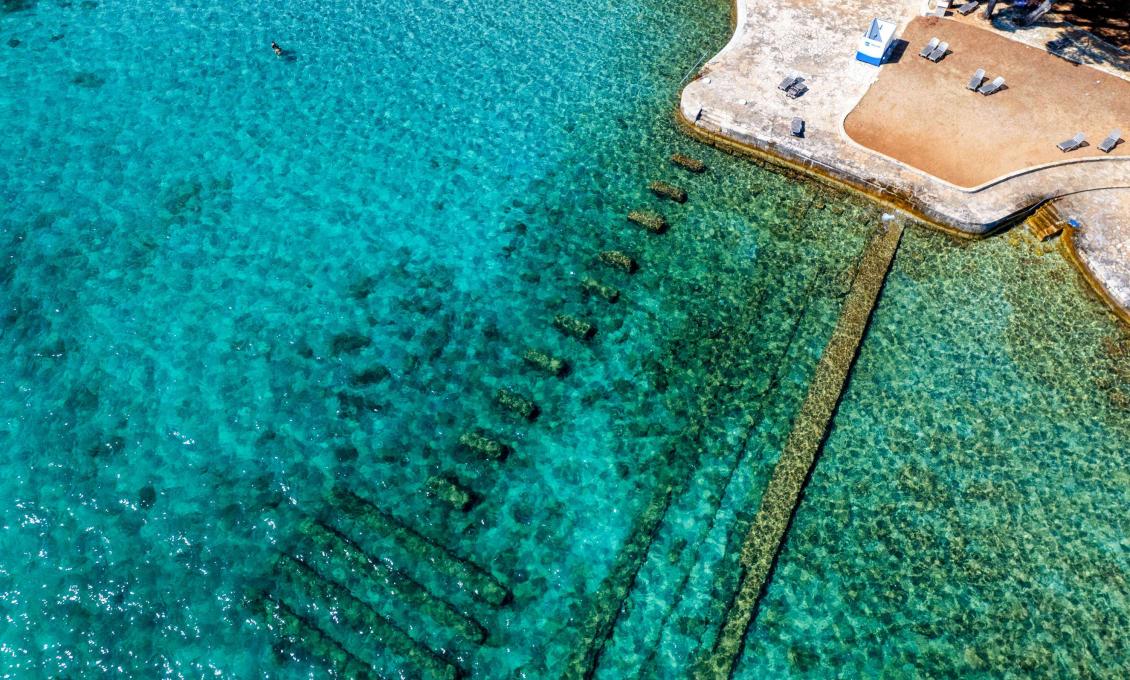
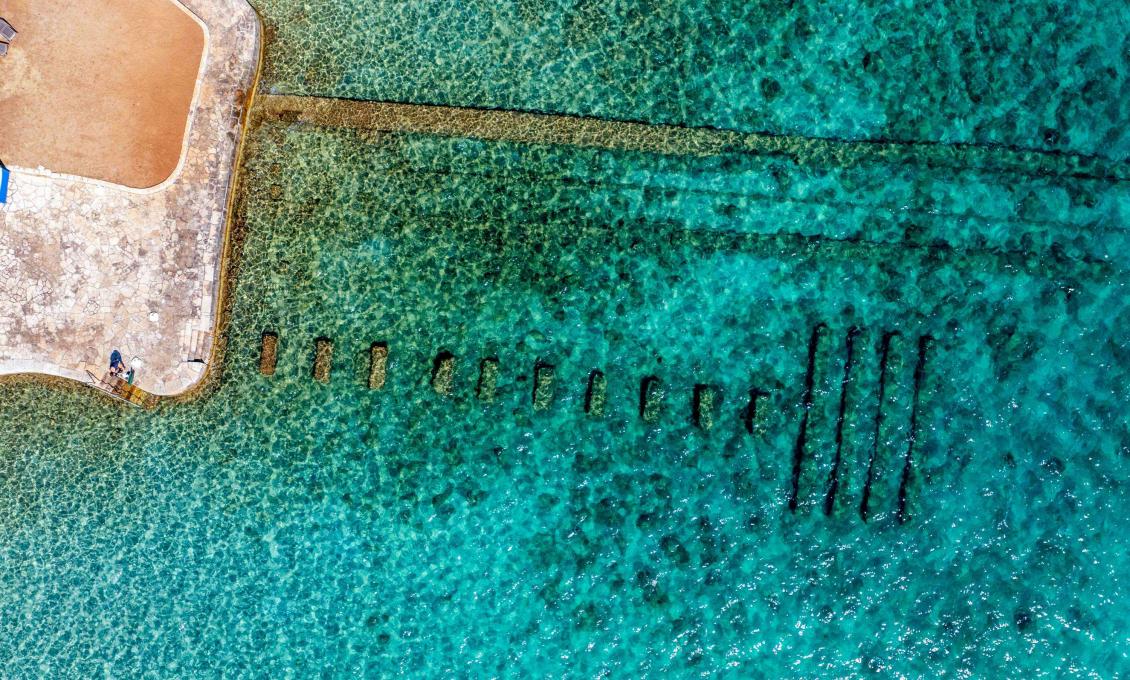
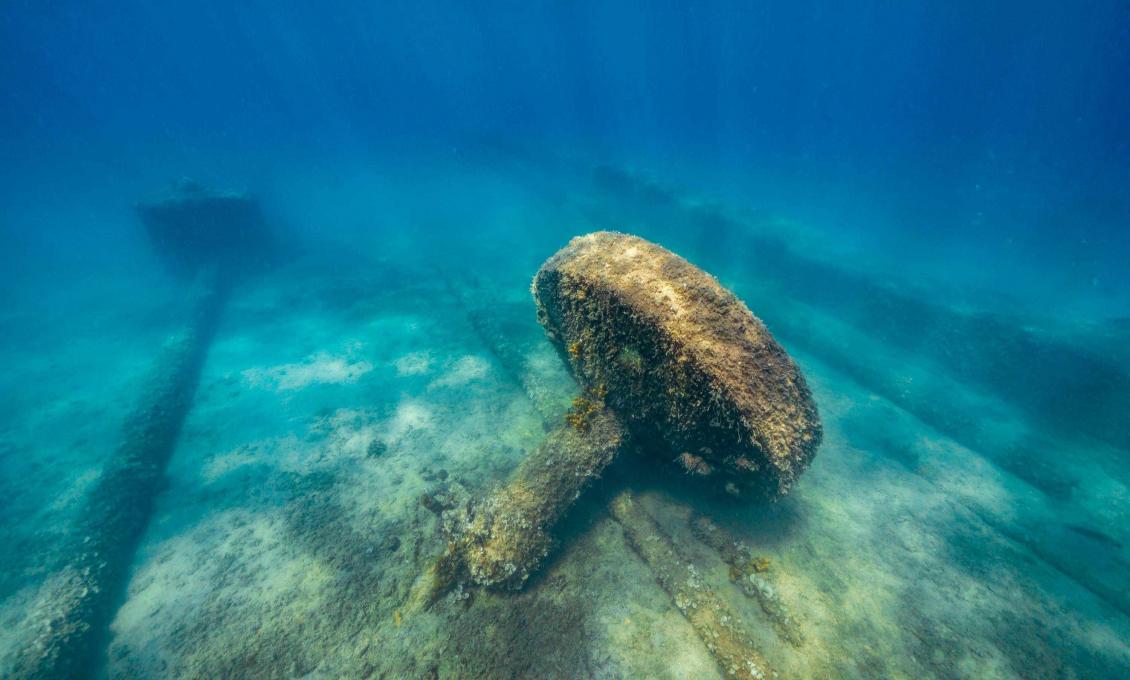
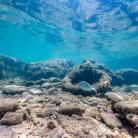
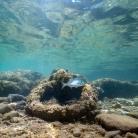
Over time, the beach was expanded with towers and lookout points, it had 180 cabins with a sun deck on the upper floor, able to accommodate up to 500 guests. It was considered the most elegant and best-equipped beach on the Adriatic at that time, and even the imperial family enjoyed swimming in Saluga Bay. Unfortunately, the beach was damaged by the Allied bombing in 1945, and in the 1950s, it was completely demolished, with only a few remnants visible underwater. A solitary mooring ring lying one meter deep near today’s pier remains as a witness to the past.
The Charms of Saluga
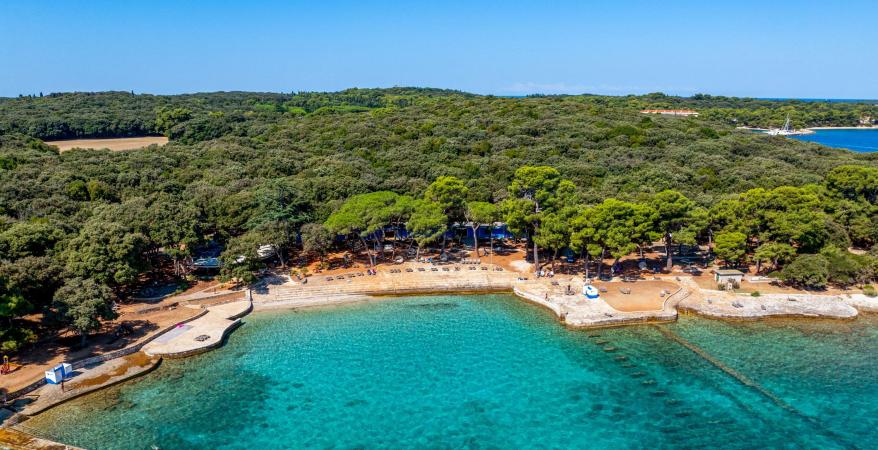
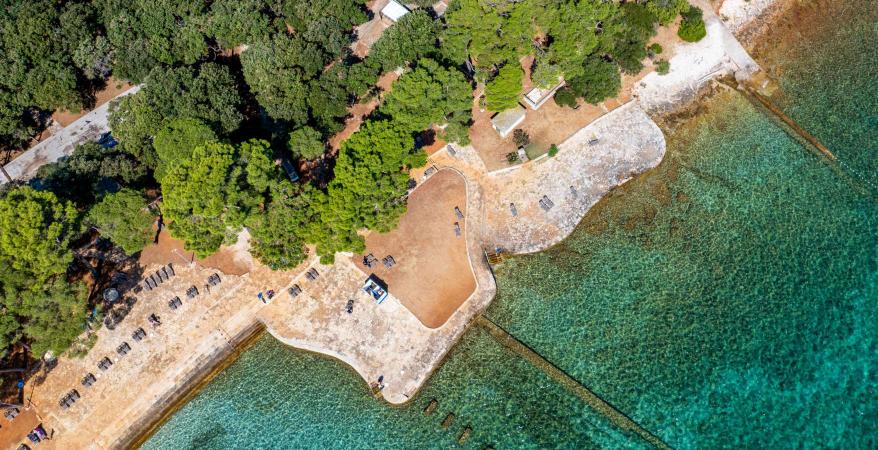
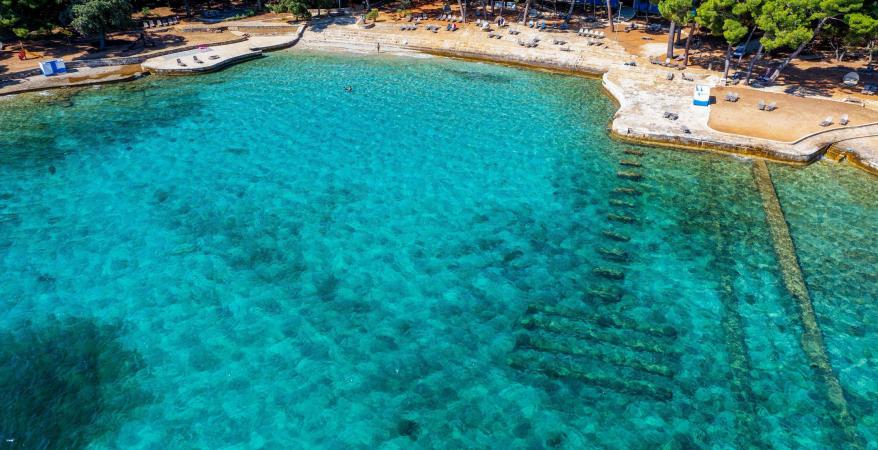
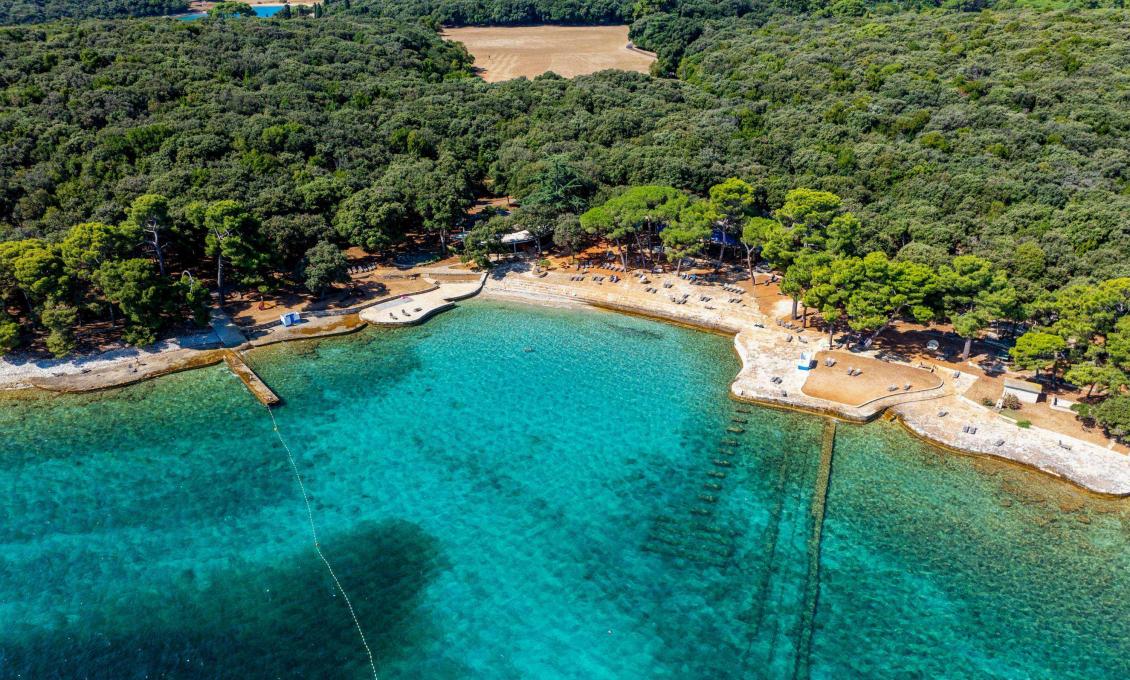
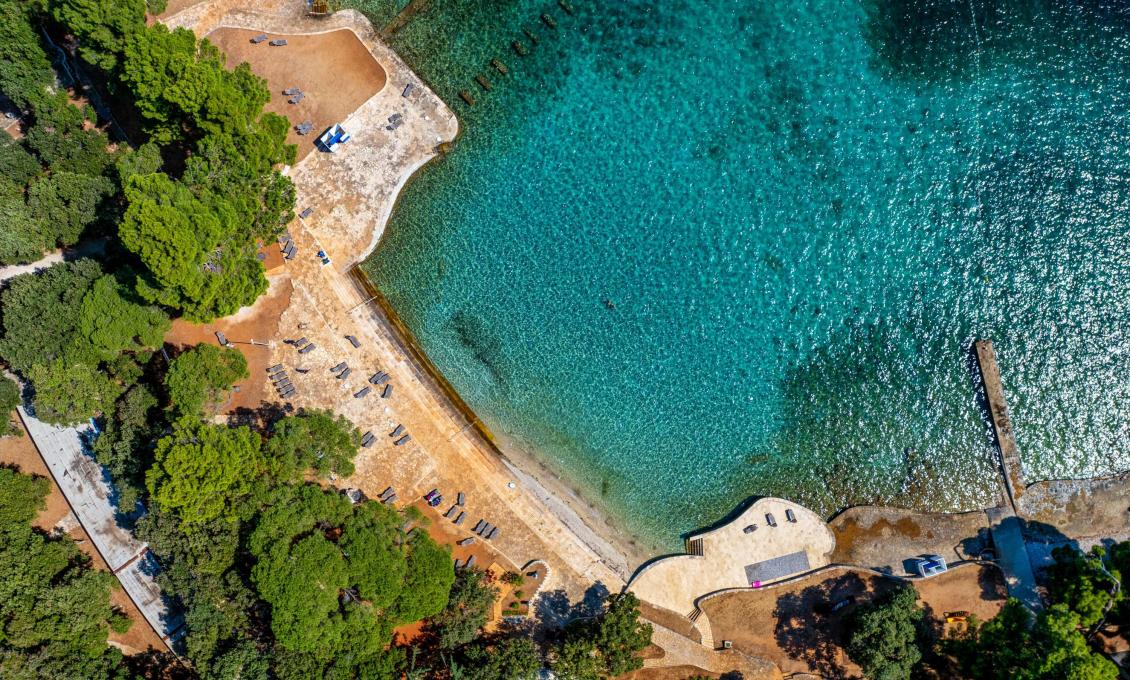
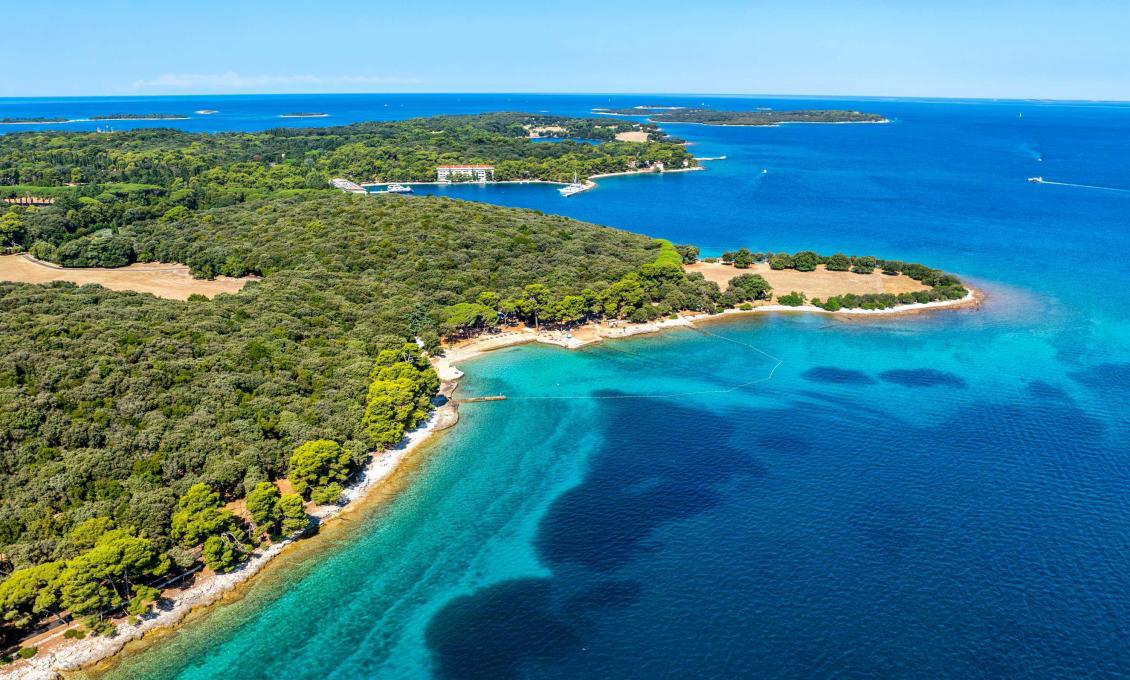
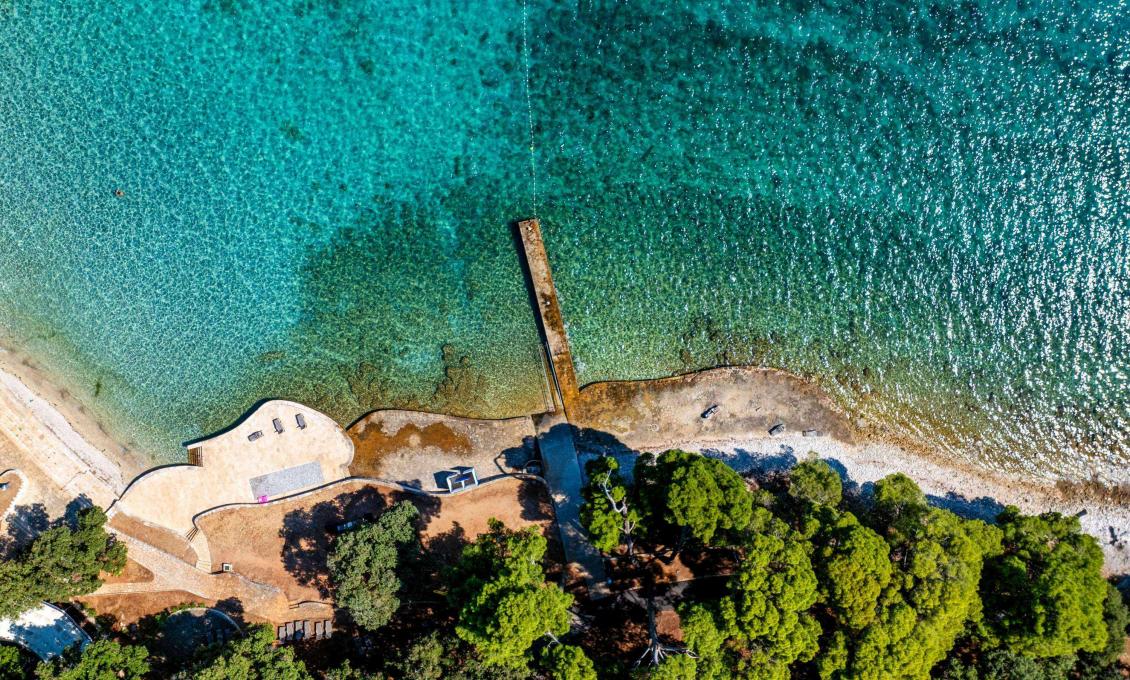
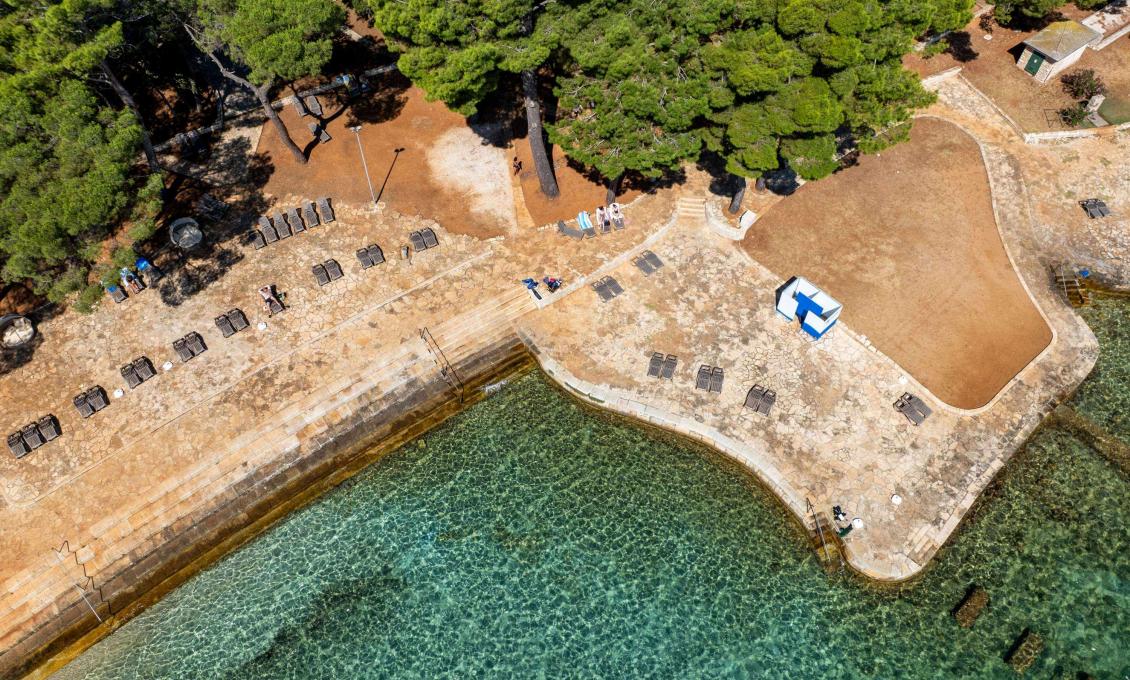
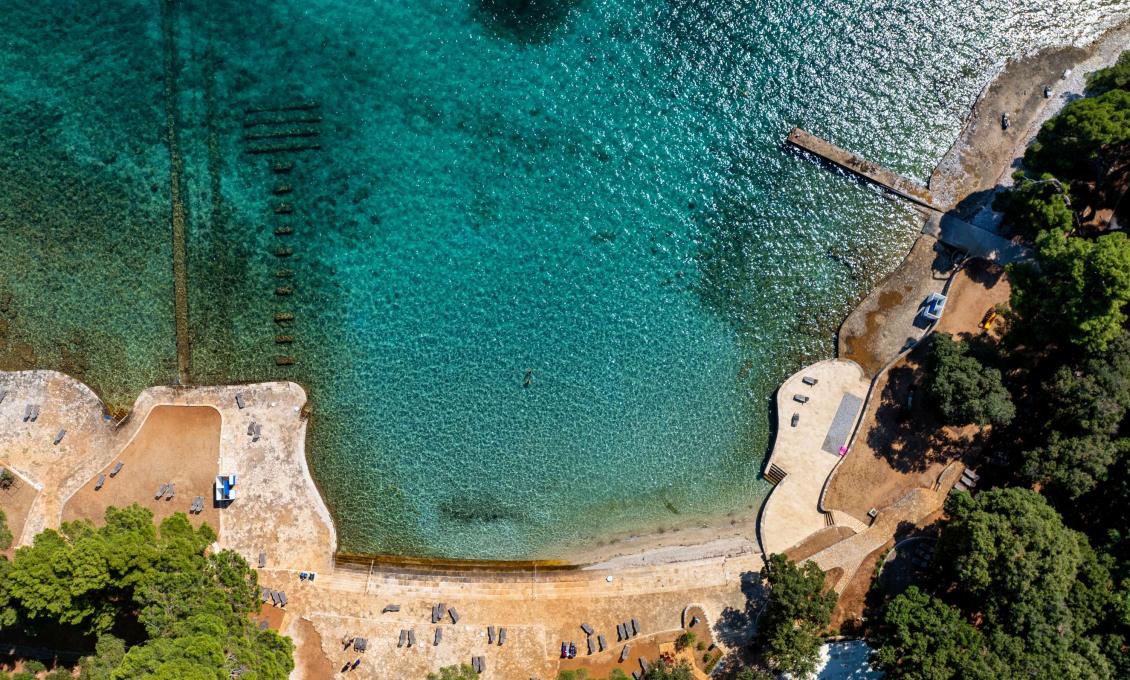
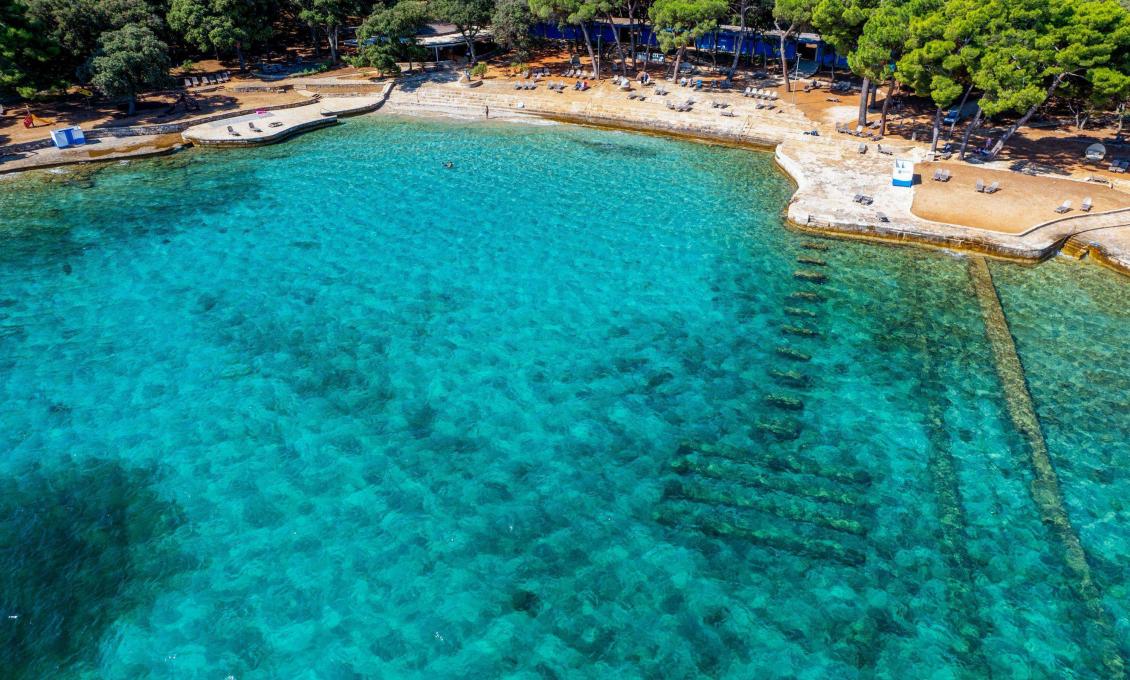
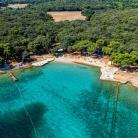
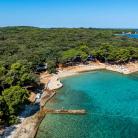
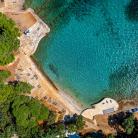
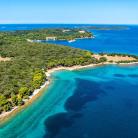
Today, Saluga Beach has a large paved sunbathing area with steps leading to a natural sandy seabed. In the shade of dense pine trees, visitors can relax on sun loungers or sun beds, enjoying a beautiful view of the turquoise sea and the Istrian coast.
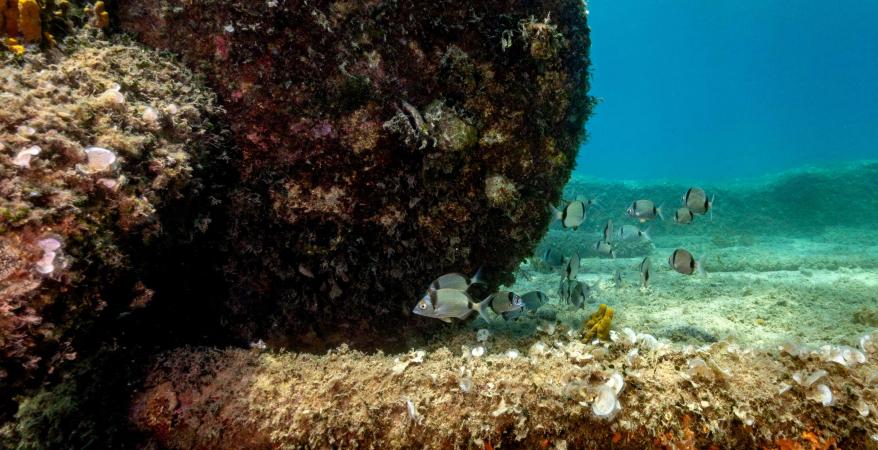
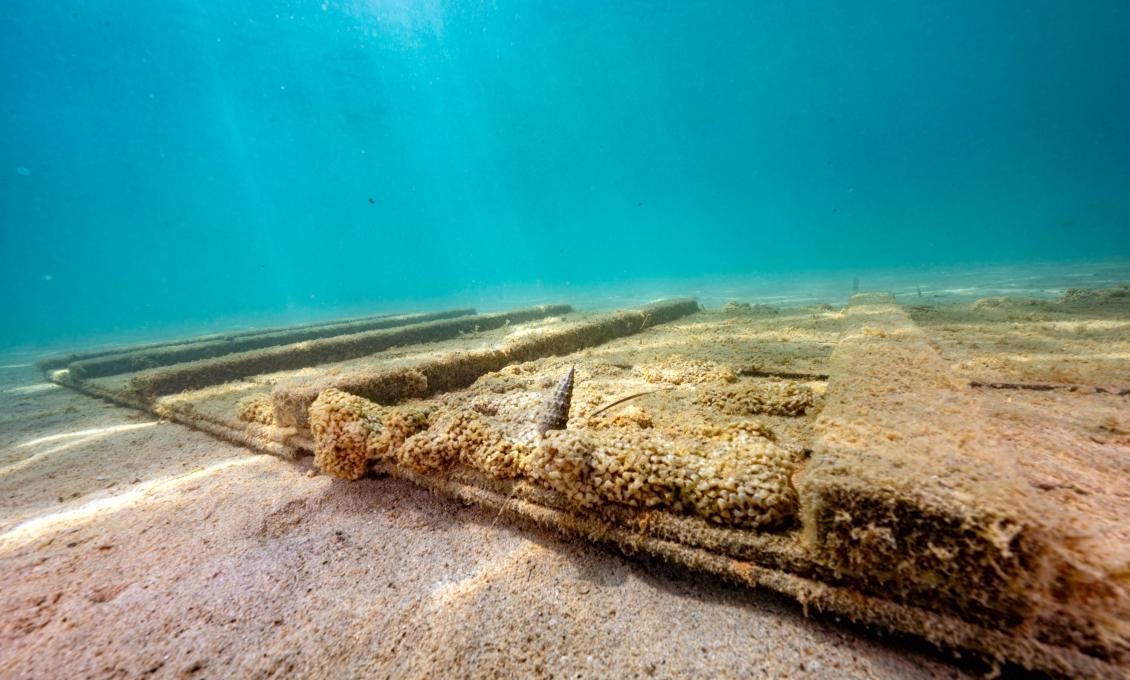
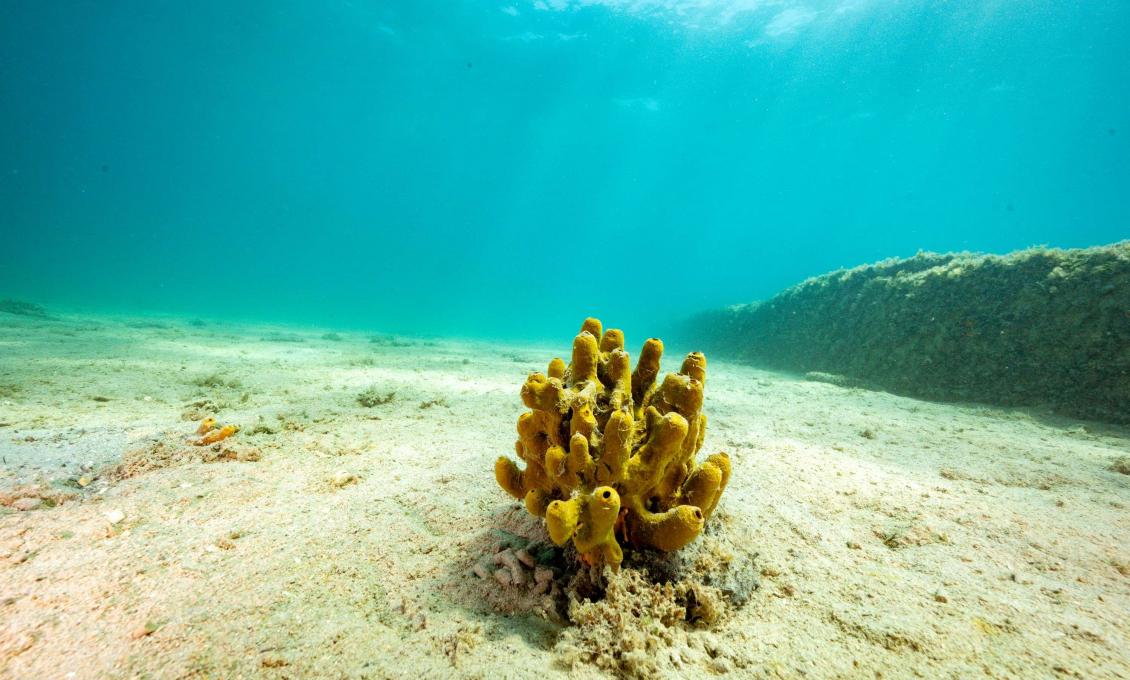
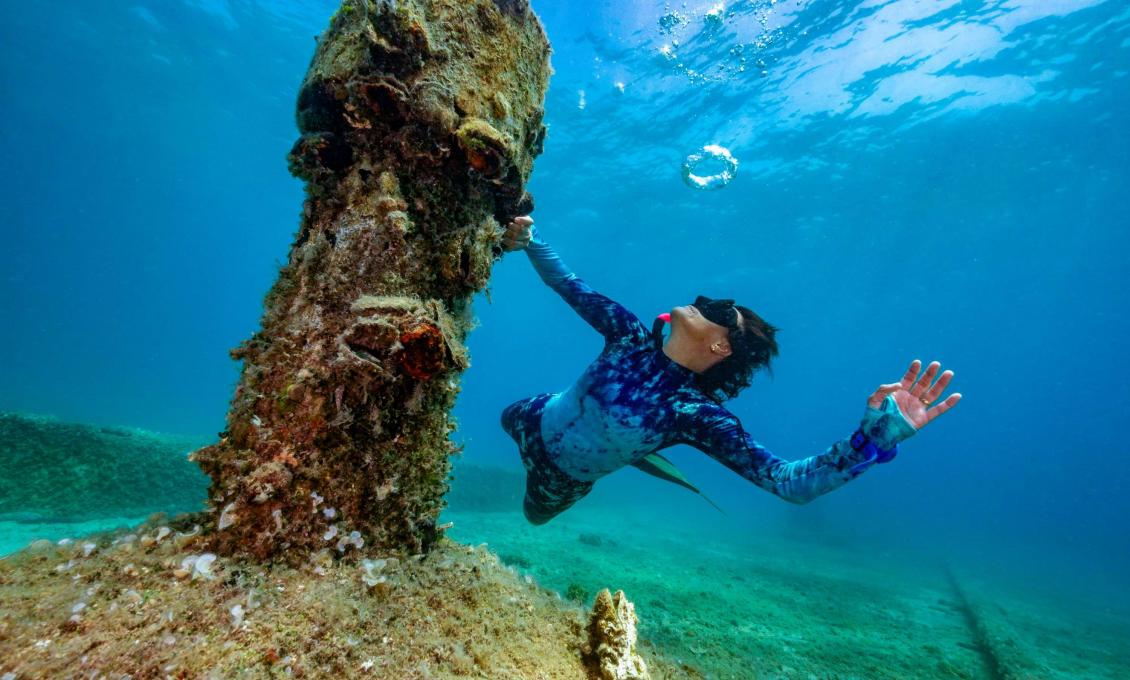
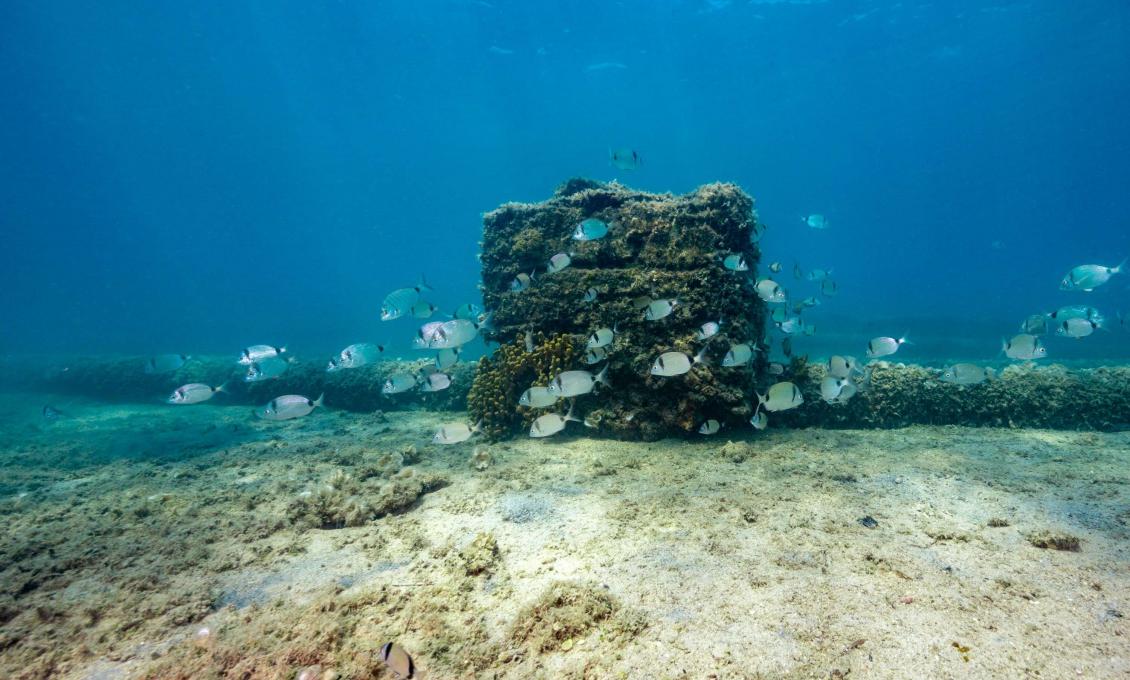
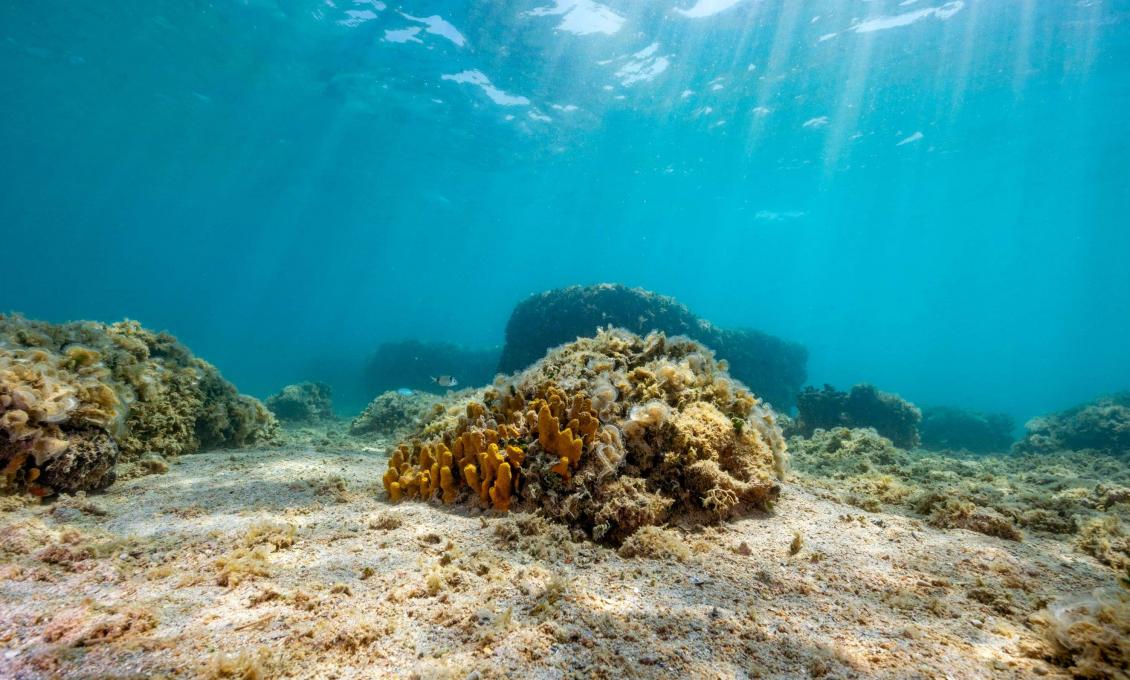
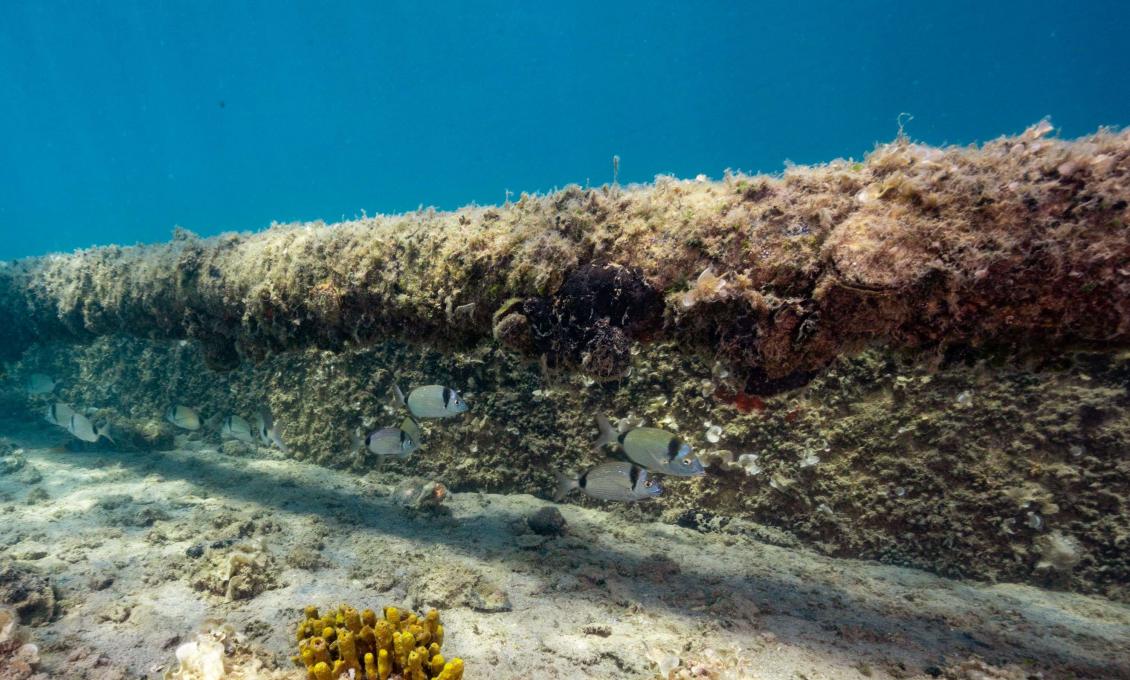
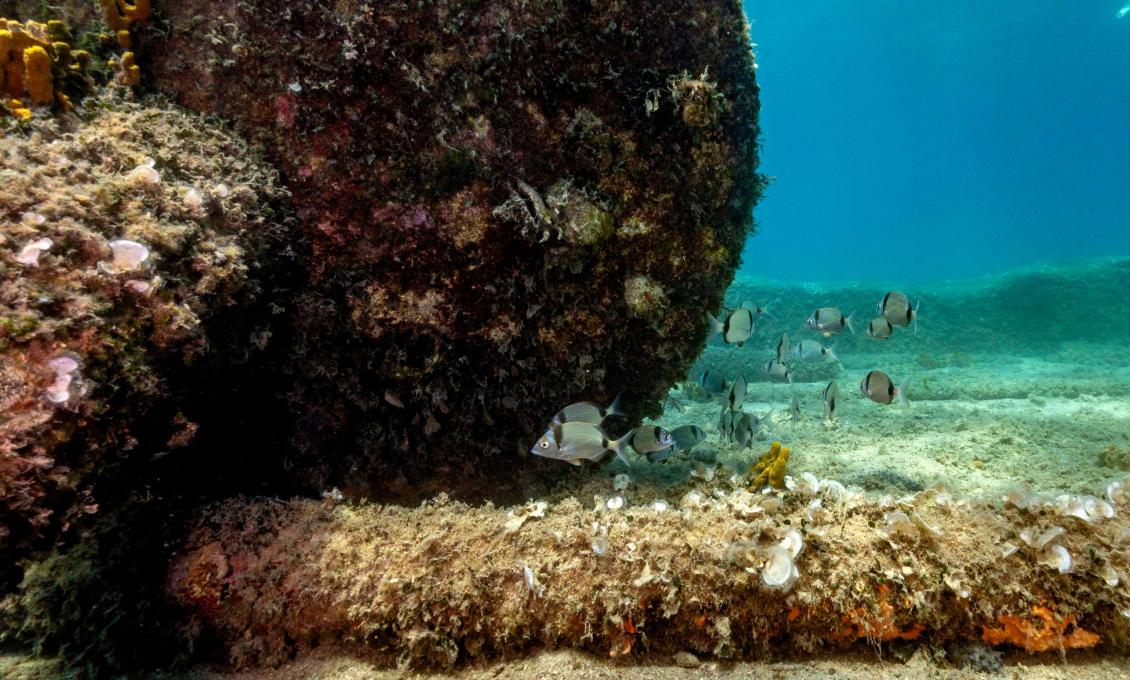
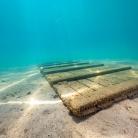
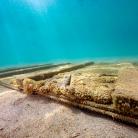
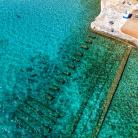
Wherever you enter the water, it’s easy to get oriented. In the center of the bay, the seabed is pure sand, while to the left, facing Fažana, is an area ideal for exploring. Here lie the concrete foundations of a wooden pier from the recent past and water pipes supplying Brijuni, following the original Kupelwieser pipeline route. An incredible variety of fish live and swim here!
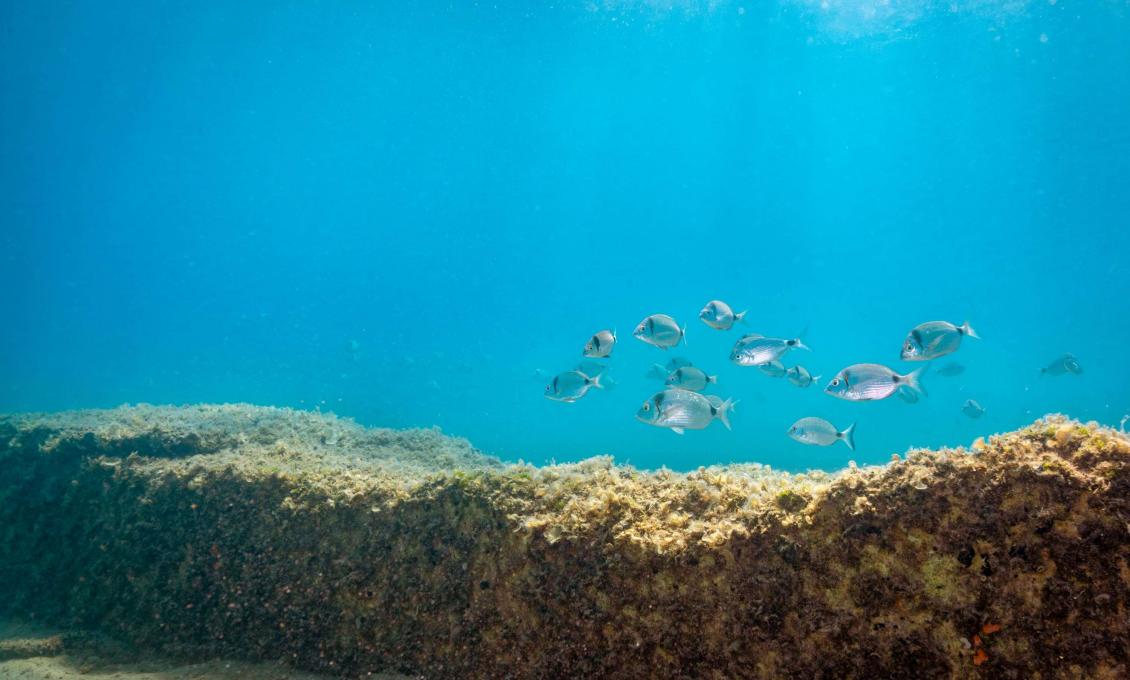
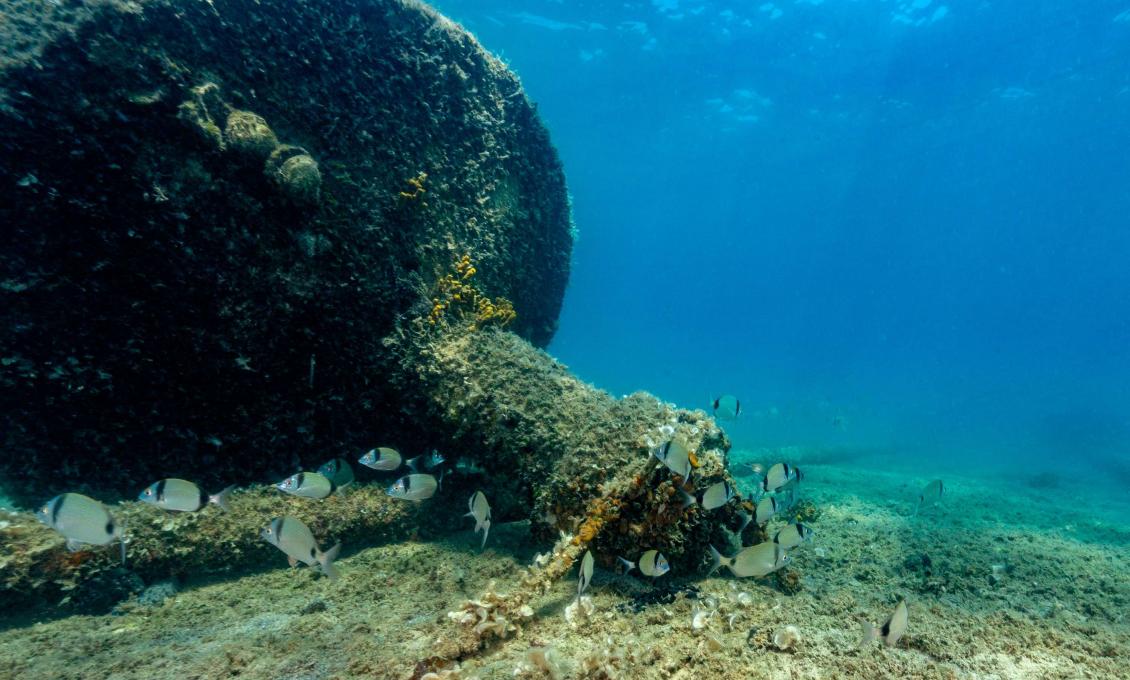
Over time, these remnants of the past have become intriguing hideouts and gathering spots for Saluga’s marine life. Since Brijuni was declared a national park, fishing has been prohibited, allowing fish to thrive, swimming relaxed alongside bathers as if they, too, are here for rehabilitation just as the visitors of the past. They are unusually large and not as timid.
Underwater Inhabitants
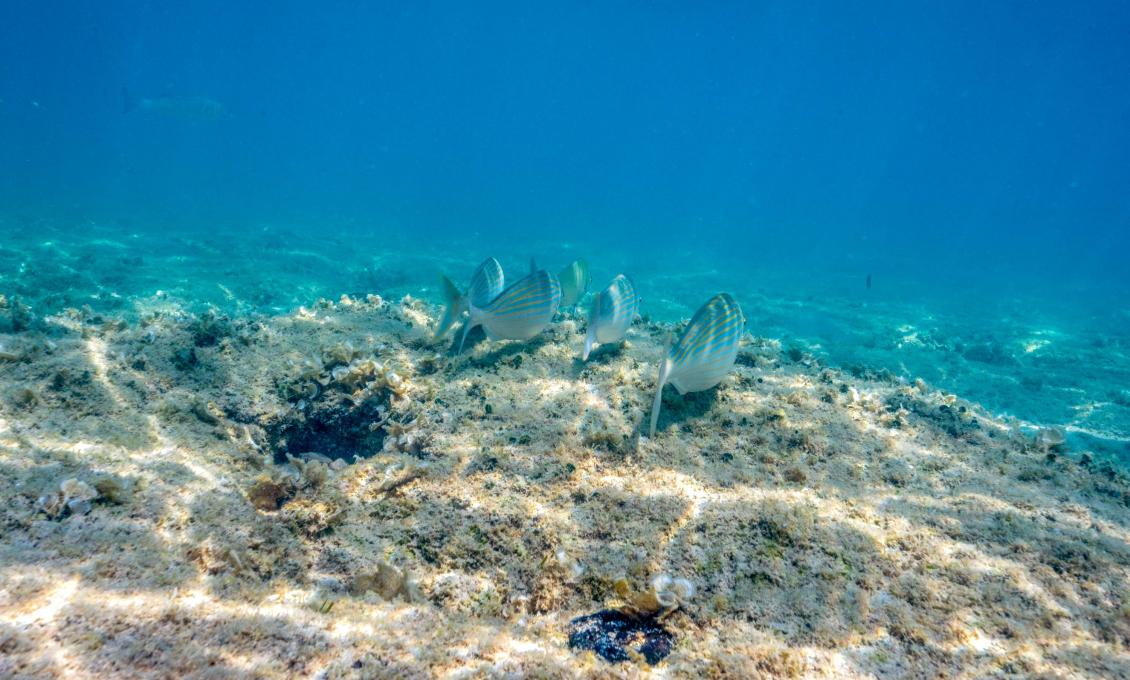
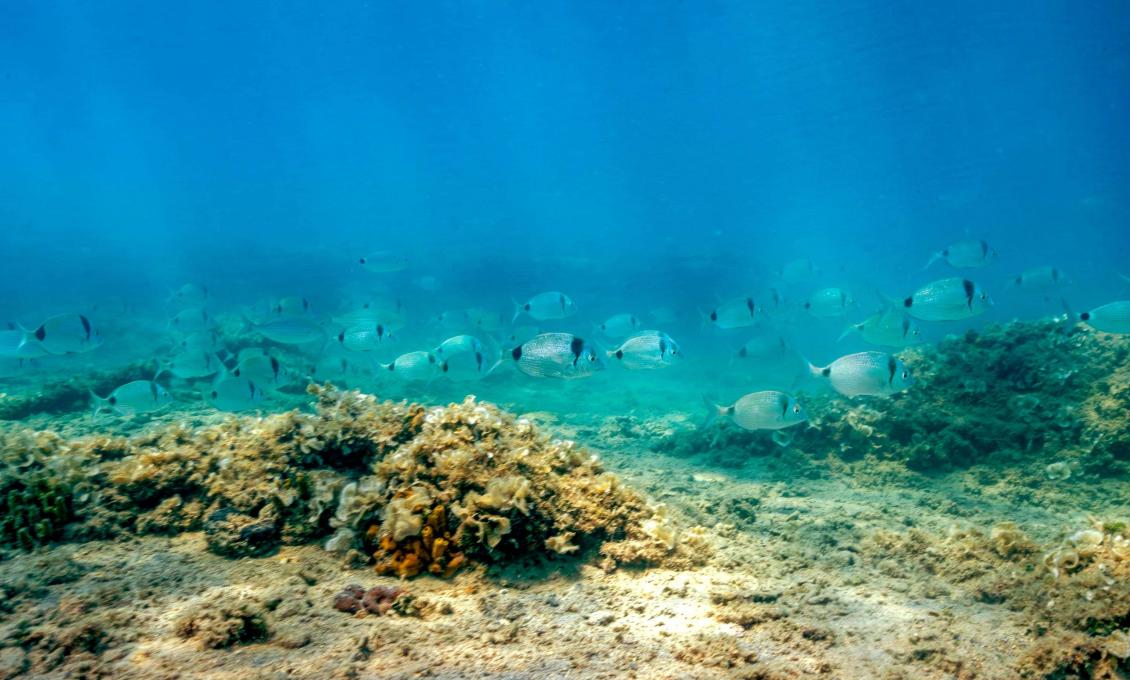
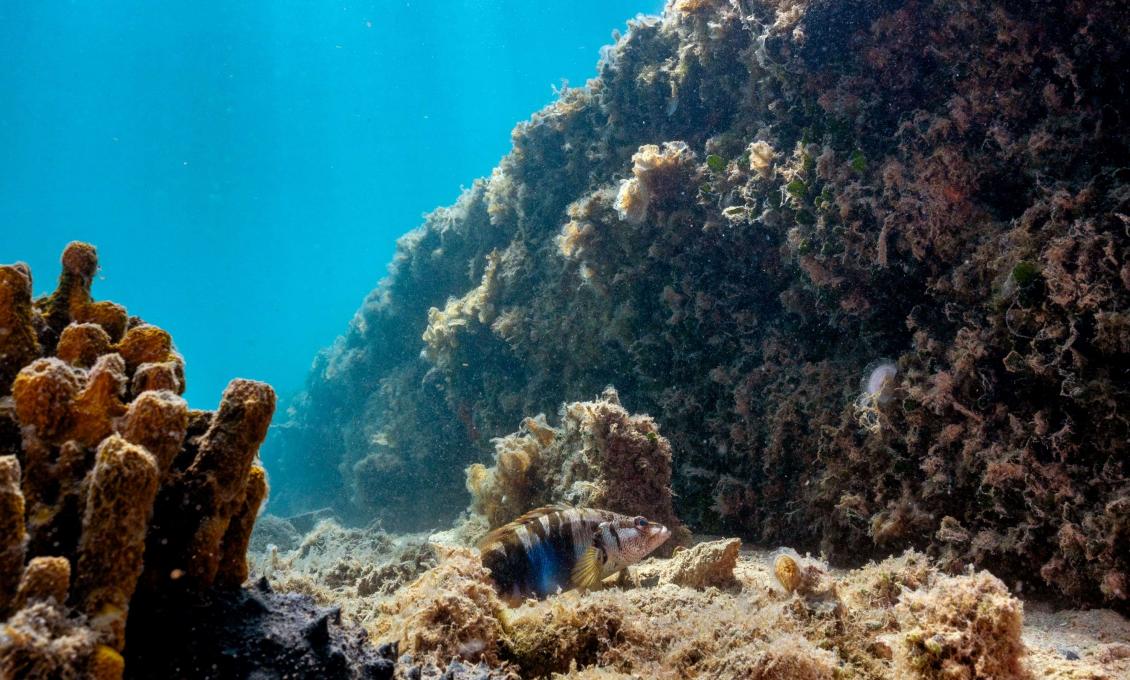
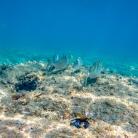
Here, a school of two-banded seabreams or locally known as "baraj," consisting of hundreds, gather around the square joints of the water pipes. You’ll recognize them easily by their distinct feature after which they were named - a black stripe resembling a collar behind the head, just like monks[i]. They are silvery with a golden sheen and a black stripe on their tail. When approached slowly, they will not flee but simply readjust slightly while maintaining formation, like a sea curtain. Around them are saddled seabreams (locally called "očada"), easily identifiable by their large eyes and a black-and-white ring around their tail.
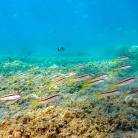
A dense underwater “traffic” is operated by a school of bluefish, constantly circling the bay and herding other fish like shepherds. You can identify them by their strong tails, indicating a fast and powerful swimmer, and their robust heads, revealing their aggressive, hunter-like nature.
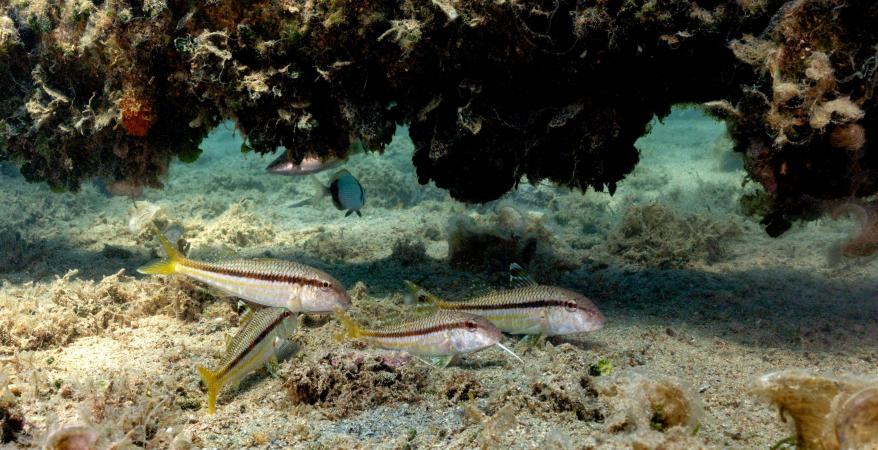
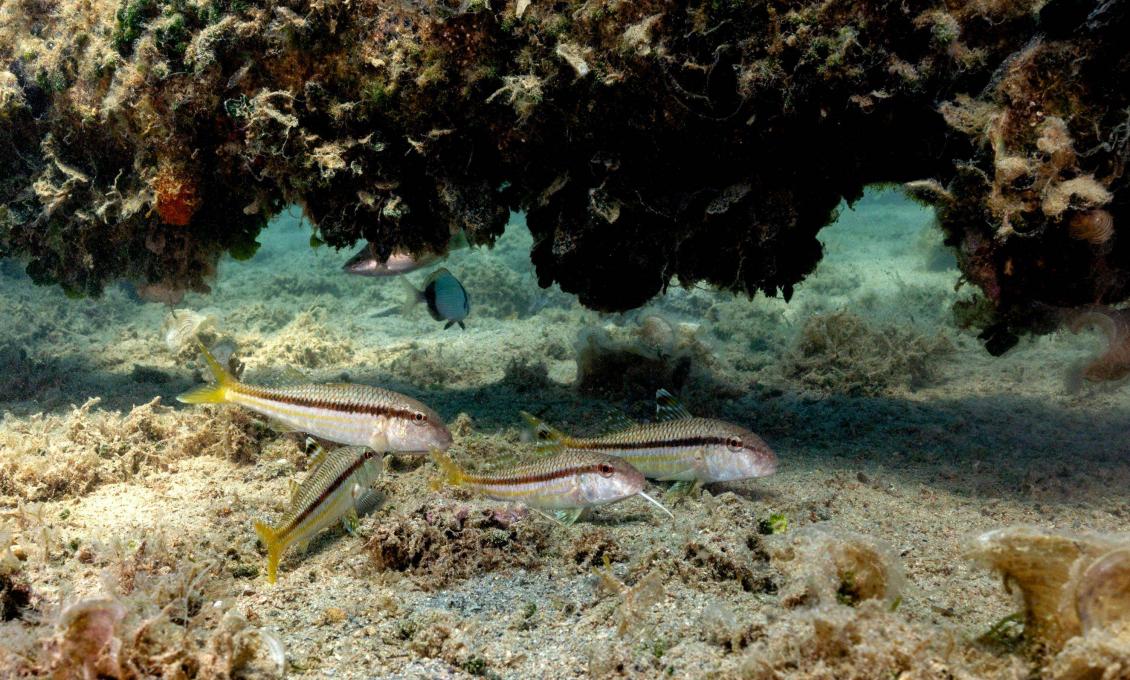
A school of mullets circles the bay, playing among the obstacles on the seabed. Here you can see particularly large specimens, which can be startling if you’re not expecting them. In the shallowest parts of the beach, large sea bass can also be found, which, like mullets, favour brackish water found at Saluga due to a small freshwater spring near the bistro. Sea bass have greenish backs, silver-white bellies, and a dark spot on their gill cover.
Sand Games
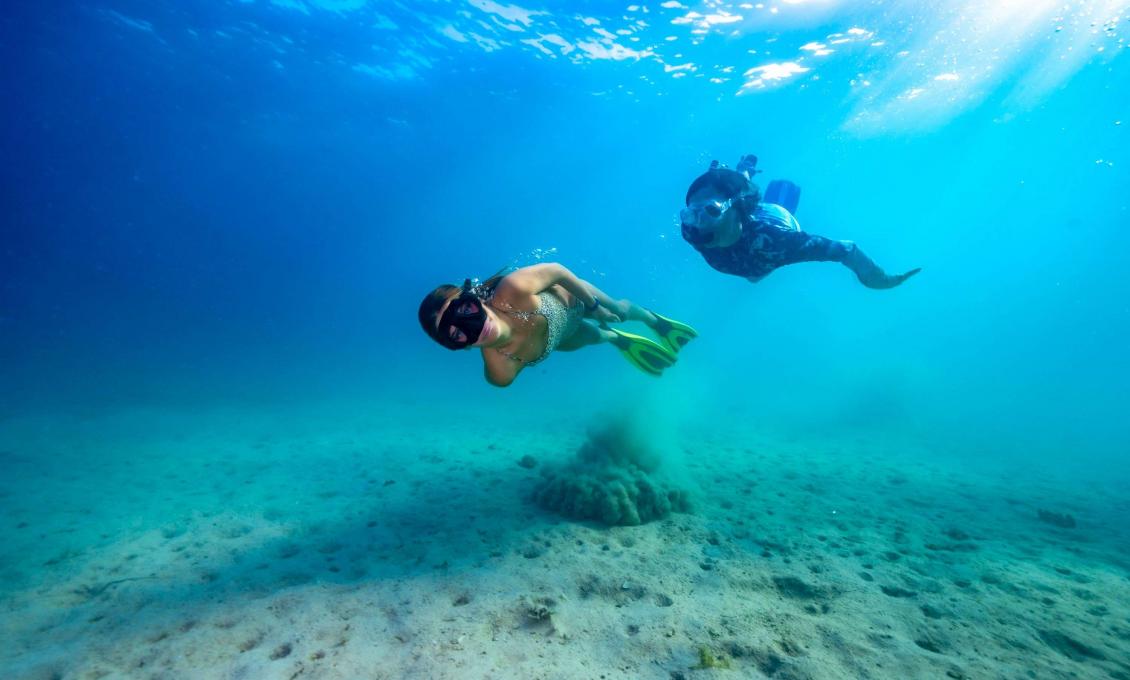
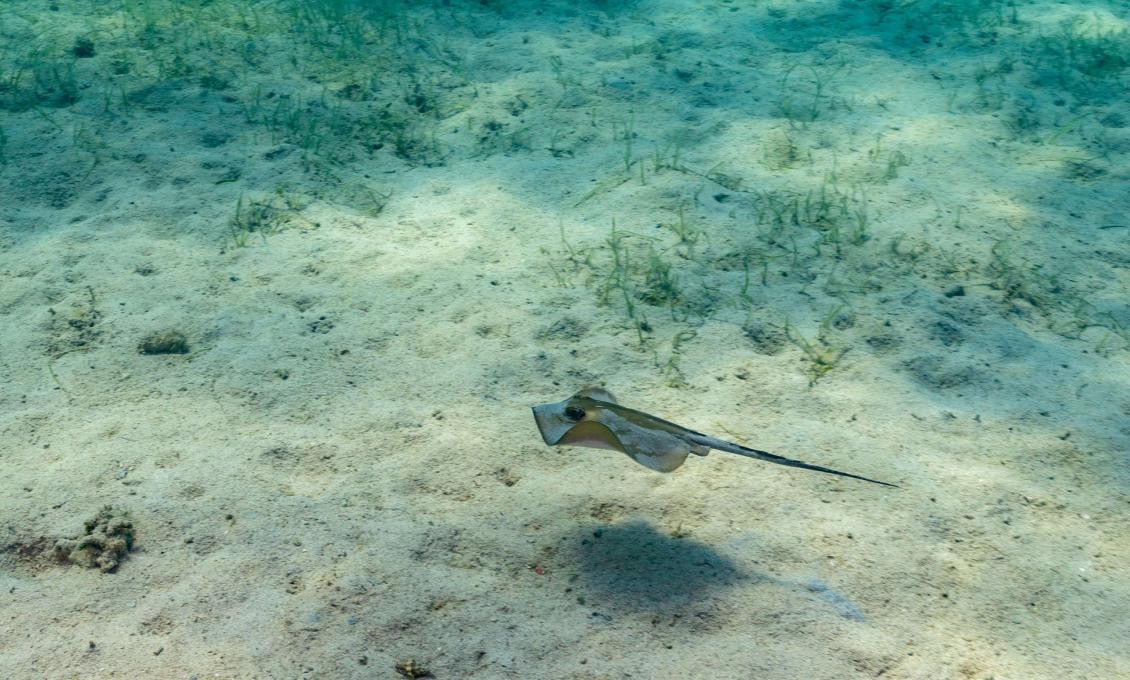
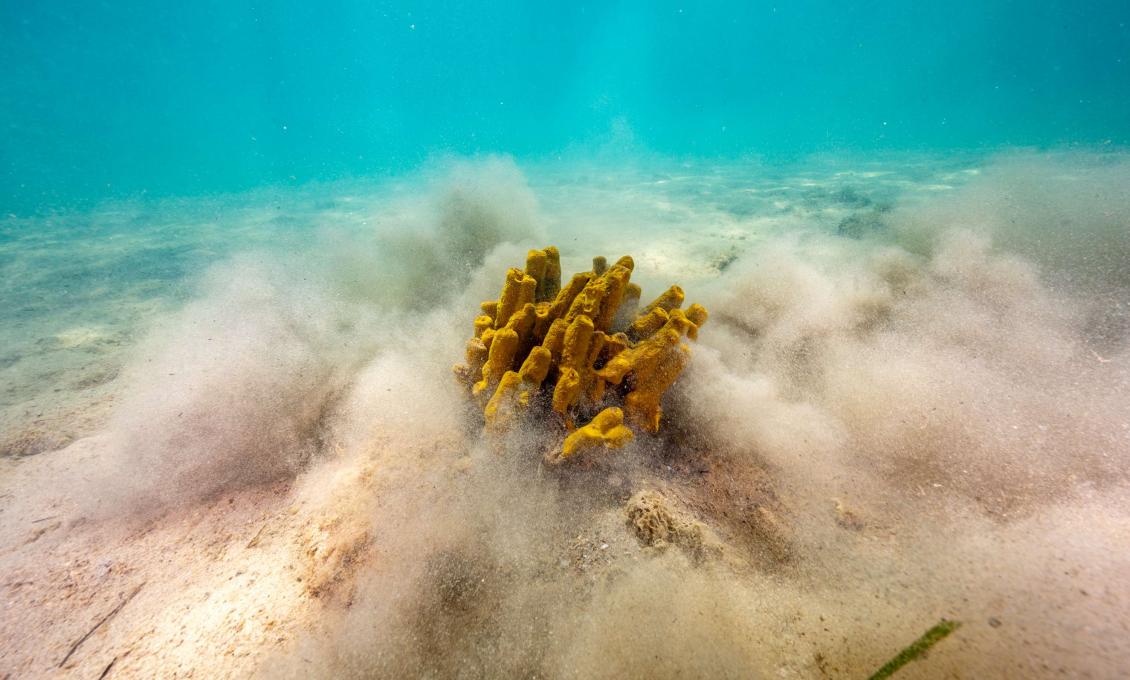
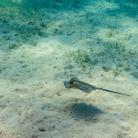
If you enjoy stirring up clouds of sand, curious sea bream, perhaps the most striking fish of all, will likely join you. With a strong head crowned with a golden mark between the eyes, they’re known as the “queen of fish.” You’ll also notice traces of digging in the sand—caused by a sand steenbras, which forage for food by burrowing, identifiable by their thin, transverse stripes. Similar marks may be left by young rays, which can be seen in the early morning, peacefully waiting for the first bathers to enchant them gliding just above the sand.
Seahorses
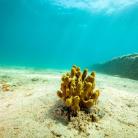
If you observe carefully, you might find a charming pair of seahorses with a permanent home in Saluga’s underwater world. Though classified as fish, they look like fairy-tale creatures, moving upright, very slowly, using their small dorsal fins. They have horn-like protrusions on their heads, changing colour based on their environment and mood. Holding onto sea sponges or algae with their curled tails, they blend seamlessly into their surroundings, making them hard to spot. Interestingly, the male carries the eggs in a pouch where they fertilize and hatch. During pregnancy, they perform a daily ritual dance.
Caring for the Sea and Its Inhabitants
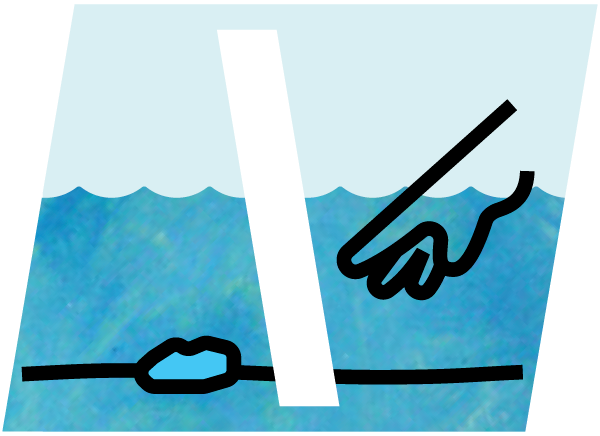
If you’re lucky enough to spot seahorses, avoid touching them, as they are a strictly protected species. They always live in pairs and are known to stay faithful to their partner for life. If they get separated, there’s little chance of reunion.
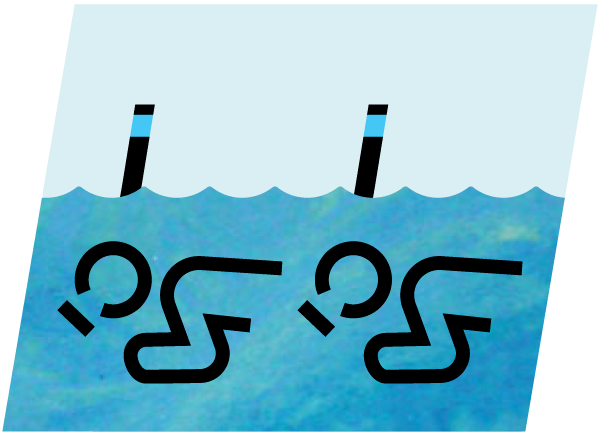
Please avoid feeding the fish, as it can harm them and spread disease among other fish; in general, disturbing the marine life is not allowed.
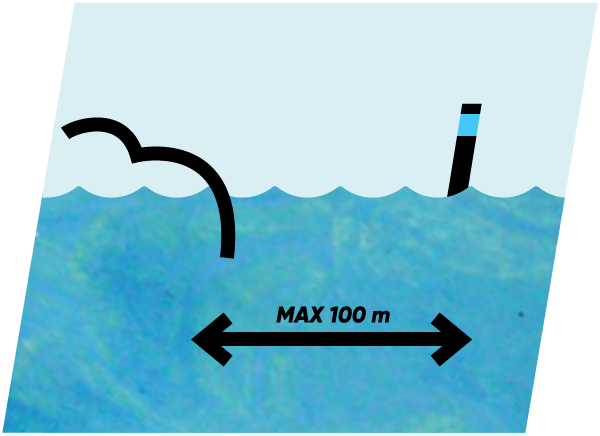
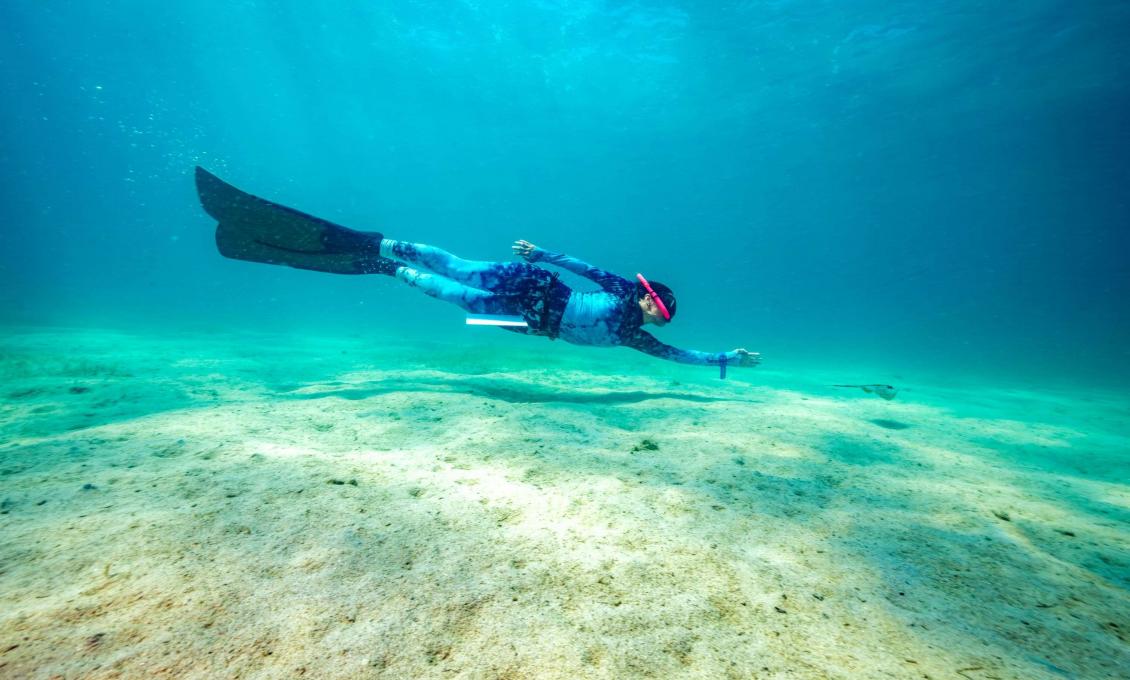
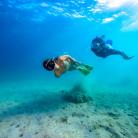
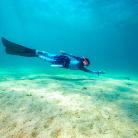
To discover the wonders of the Brijuni’s underwater world and enjoy snorkeling, all you need is a diving mask. For the more adventurous, fins are recommended.
Information for Visiting the Brijuni Archipelago:
Access to Brijuni National Park is only possible by boat departing from Fažana. Boats operate daily, and tickets can be purchased at the Fažana office or online.
Ticket Purchase for Day Visitors:
www.np-brijuni.hr/hr/ulaznice
For detailed visit information, refer to Brijuni National Park’s website:
www.np-brijuni.hr/hr/planiraj-posjet
More about Saluga Beach on Veli Brijun:
www.np-brijuni.hr/hr/planiraj-posjet/sport/plaza-saluga