

Ben Fogle Explores Istria: From Ancient Heritage to Unspoiled Nature
Ben Fogle, one of Britain’s most renowned travel writers, television presenters, and advocates of sustainable living, recently visited Istria, discovering some of the peninsula’s most remarkable natural, cultural, and gastronomic treasures
Known to millions of viewers worldwide through the BBC series New Lives in the Wild, Fogle began his one-day journey in southern Istria. His first stop was Pula, a city that seamlessly blends more than two millennia of history with a strong commitment to education, heritage preservation, and marine conservation. During his visit, Fogle explored the Arena, one of the world’s best-preserved Roman amphitheatres, before continuing to Aquarium Pula. There, he took a particular interest in the Sea Turtle Rescue Centre and the aquarium’s conservation initiatives aimed at protecting the noble pen shell, one of the Mediterranean’s most endangered marine species.
Housed within a historic Austro-Hungarian fortress on the Verudela Peninsula, Aquarium Pula further enriched the story of Pula’s rich heritage. That story had begun with Fogle’s stay at Hotel Monumenti, located within a former Austro-Hungarian military zone and protected cultural heritage site. Situated on Pula’s waterfront within a carefully restored former military barracks, the five-star Heritage Hotel & Resort Monumenti stands as a prime example of successful heritage revitalization. The property seamlessly combines historical character with contemporary design, while embracing the principles of sustainable tourism development.
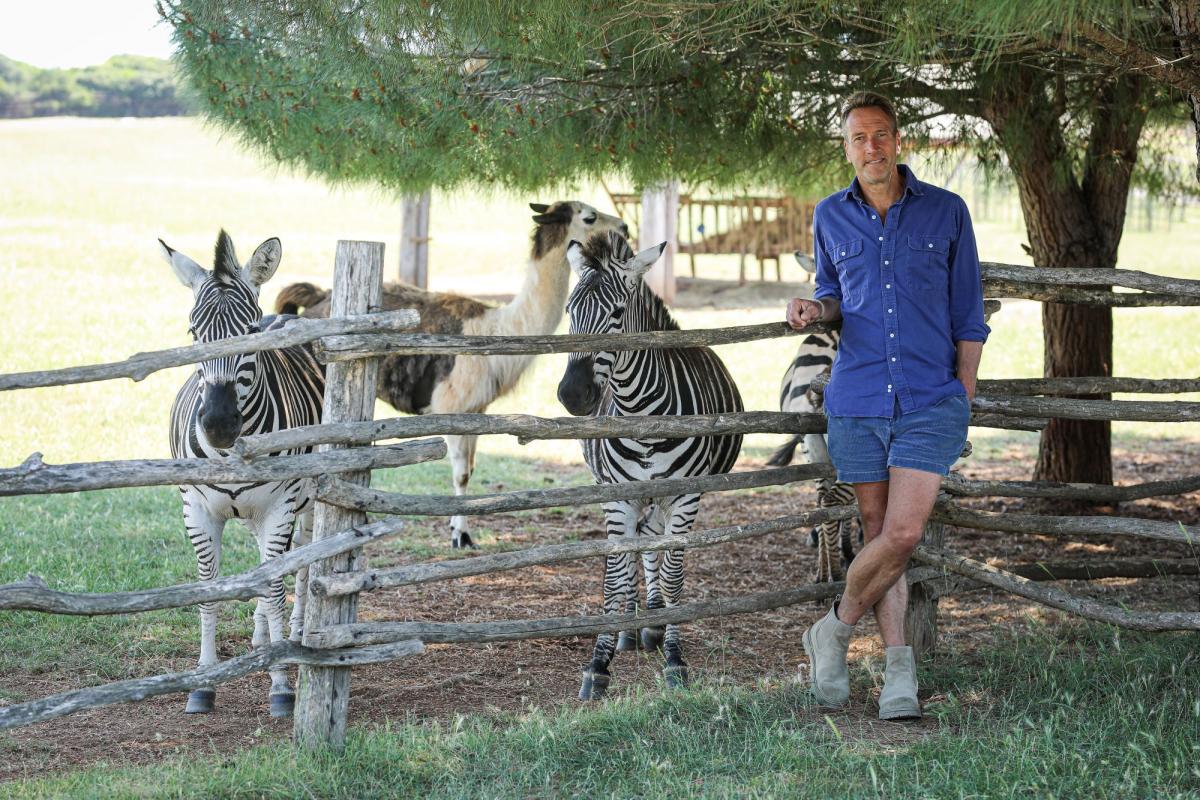
No journey through Istria is complete without a visit to the Brijuni Islands. Renowned for their exceptional natural beauty, rich biodiversity, and fascinating history, the islands form part of a national park where nature and culture exist in remarkable harmony. It was this unique blend of natural and cultural heritage that Fogle identified as one of the key pillars of the destination’s long-term sustainability.
Mediterranean Flavours and Timeless Views
At the family-owned Chiavalon estate in Vodnjan, Ben Fogle gained first-hand insight into the production of extra virgin olive oil, widely regarded as among the finest in the world. During an educational tasting led by Tedi Chiavalon, he explored the distinctive characteristics of Istrian olive varieties, learned about the production process, and discovered the principles of sustainable and responsible farming that underpin the estate’s success. Inspired by the experience and the wealth of knowledge shared, Fogle commented that he had never before attended such a detailed and engaging presentation on olive oil. The tasting offered a deeper understanding not only of quality and production methods, but also of the central role extra virgin olive oil plays in the Mediterranean way of life.
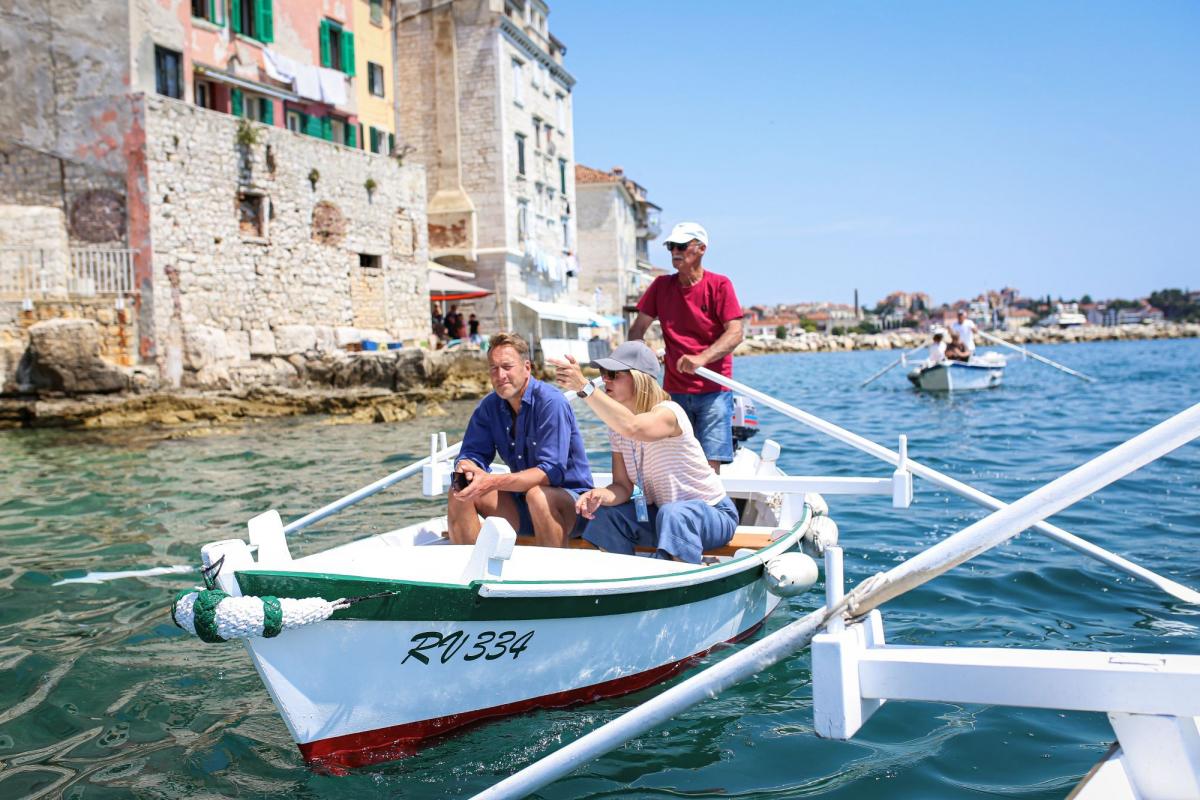
His encounter with Istria’s Mediterranean spirit continued in Rovinj. Wandering through the charming cobbled streets of the old town, taking in views of the Church of St. Euphemia, and learning about the traditional batana fishing boat and the Batana Ecomuseum further reinforced the importance of preserving local identity in an age of increasingly globalised tourism. Recognised by UNESCO, the ecomuseum plays a vital role in safeguarding Rovinj’s rich maritime heritage for future generations.
Truffle-Hunting Traditions in Central Istria
The journey then led inland, revealing a completely different side of Istria. In Motovun, Fogle discovered the story of the Motovun Forest and the region’s centuries-old truffle-hunting tradition, which continues to be passed down through generations of local families.
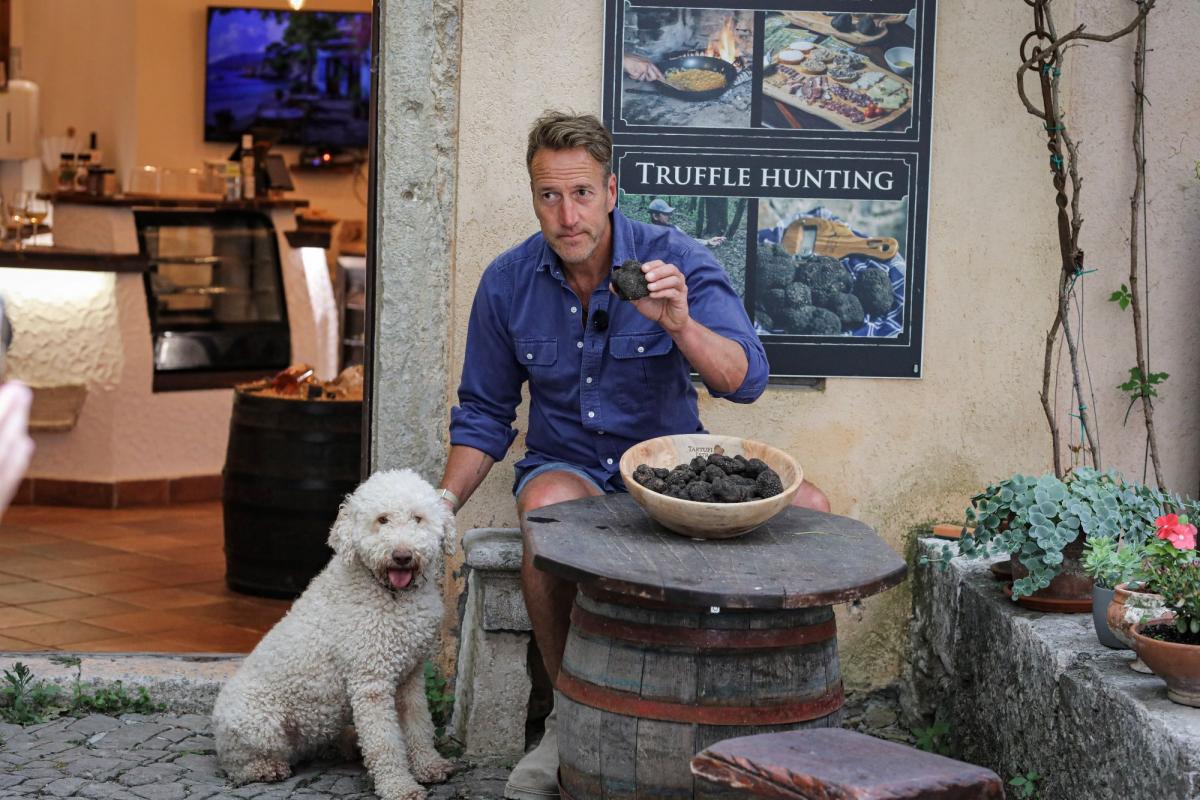
Accompanied by Alen Bartolić of Tartufi Istra, experienced truffle hunter Alen Papišta, and Kiki, a specially trained truffle dog, Fogle witnessed the remarkable skill and teamwork required to locate these prized delicacies. The experience offered a fascinating insight into the tradition behind one of Istria’s most celebrated gastronomic treasures. A visit to Konoba Fakin opened another important chapter in the Istrian story - one dedicated to Teran, the indigenous grape variety that has become a symbol of the peninsula’s interior and its rich winemaking heritage.
The Diversity of Northwestern Istria
The final stage of Ben Fogle’s journey led him to Grožnjan and Momjan. Known as the “Town of Artists,” Grožnjan stands as a remarkable example of successful cultural heritage revitalisation, whilst a key highlight of the visit was the Parenzana, the former narrow-gauge railway that once connected Trieste and Poreč. Today, the route has been reimagined as one of the region’s most popular cycling and hiking trails, serving as a powerful example of how industrial heritage can be sustainably repurposed into a unique tourism experience.
In nearby Momjan, a visit to the Kabola winery introduced Fogle to the story of Istrian Malvasia and the region’s commitment to organic wine production. These traditions and innovations have helped position Istria among Europe’s most exciting and respected wine destinations in recent years.
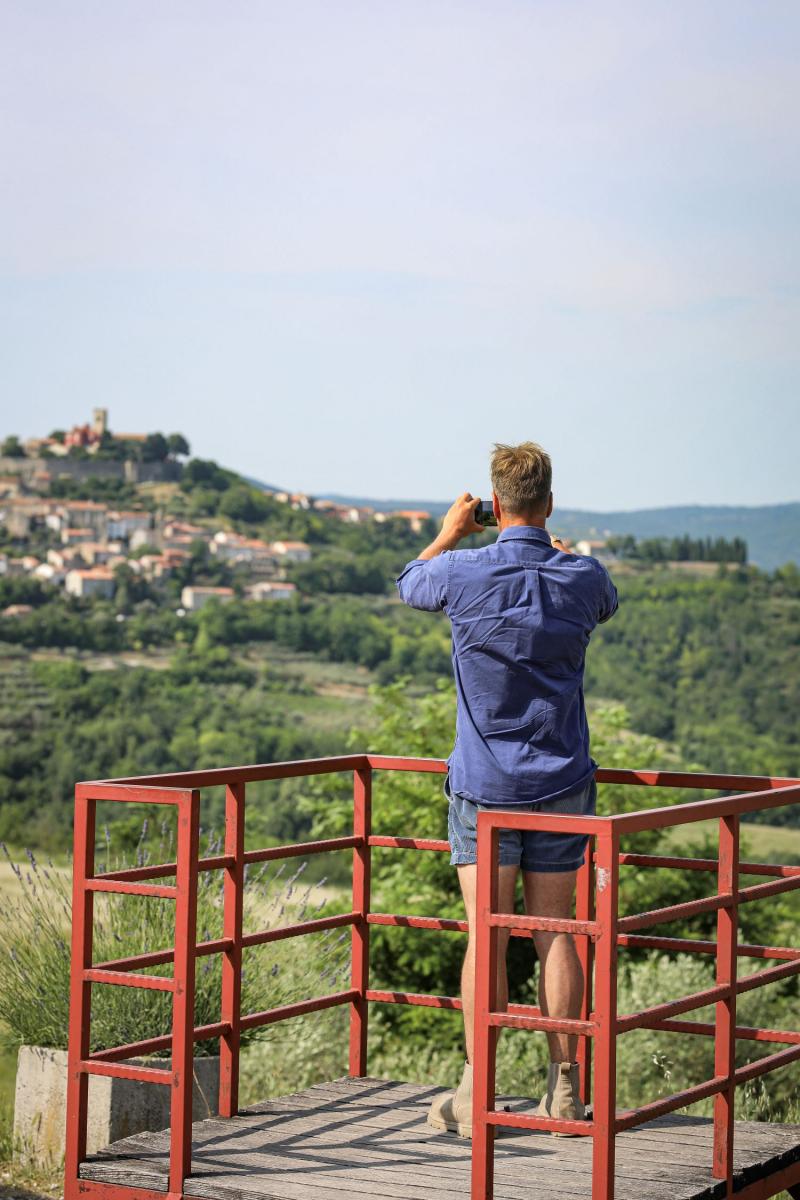
Throughout his visit, Fogle emphasised that the destinations that resonate with him most are those that have succeeded in preserving their authenticity. He found exactly that in Istria: “I have travelled to some of the most remote places on Earth, but what I seek today is not spectacular scenery - it is places that have remained true to themselves. That is exactly what I found in Istria: a sense of authenticity that simply cannot be manufactured.”
The tour of north-western Istria concluded in Brtonigla, where Fogle experienced the hospitality of San Rocco. As one of Croatia’s pioneers of boutique and heritage hospitality, the property offered him an insight into the family-run hotels for which Istria is renowned. Through their personalised service, locally inspired gastronomy, and authentic sense of place, these establishments play an important role in shaping the identity of Istrian tourism.
The visit of the internationally acclaimed British adventurer was made possible through a collaboration between the Istria Tourist Board and the Greencajt Festival, with the aim of showcasing Istria through authentic stories, sustainable practices, and the people who bring its unique character to life.
Denis Ivošević, Director of the Istria Tourist Board, highlighted the importance of such partnerships in presenting Istria to international audiences in an authentic and credible way. He noted that today’s travellers increasingly seek meaningful experiences that offer genuine value and foster connections with local communities. Through its outstanding gastronomy, preserved natural landscapes, rich cultural heritage, and people who proudly safeguard their traditions, Istria is uniquely positioned to tell a story that leaves a lasting impression on the global tourism stage.
[June 2026]