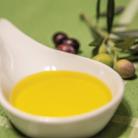







Olive processing
Before oil extraction begins, olives go through several essential preliminary steps. First, automatic suction machines remove any remaining leaves and impurities. Then, the olives are thoroughly washed using forced water circulation to eliminate any residual plant and mineral debris. Once cleaned, the olives are ready for the more intensive processes that have remained largely unchanged for millennia: grinding and mixing. These two steps follow each other closely and produce an olive paste, which is then pressed in the strictest sense of the term.
Grinding literally means breaking down—the process completely crushes both the olive flesh and pit through powerful and precise treatment, either using a traditional stone mill or modern machines equipped with grinding hammers. The resulting paste is then gently stirred in a mixing machine to break the water/oil emulsion formed during grinding, allowing the oil droplets to merge into larger drops.
These initial stages have preserved their core techniques over the centuries with only minor changes. The most notable evolution has been in the materials used for the grinders: stainless steel, prized for its durability and exceptional purity, has replaced traditional granite and wood.
Once the oil paste is separated, the next step is pressing in the strict sense, which completes the final separation of the paste into three components: pomace, vegetative (plant) water, and oil. Various methods exist for obtaining the final product, each refined over centuries of experience.
These methods generally fall into two main categories, depending on whether the process is discontinuous or continuous. The first category includes the most traditional processing method—mechanical pressing. In this process, the paste is placed on diaphragms made from plant fibres, though today synthetic fibres are increasingly used. These diaphragms are then stacked under a press, where pressure gradually increases over about an hour, causing the liquid portion—the oil paste—to be extracted. The solid residue that remains stuck to the diaphragms after pressing is called pomace.
Today, continuous methods are predominantly used, having replaced traditional pressing with other physical processes that effectively separate the oil from the solid components. For example, centrifugation exploits differences in the specific gravity of the various elements to first separate the pomace from the liquid fraction, and then to separate the oil from the vegetative water. Another innovative and hygienic technique is filtering, which relies on the difference in surface tension between oil and vegetative water. Stainless steel plates rhythmically dip into the olive paste, gradually collecting the liquid that adheres to their surface. This method recovers 60 to 70 percent of the oil contained in the olive mixture. The remaining portion is then separated from the skins and pits using a centrifuge.
The oil produced through these processes—regardless of the method—is typically cloudy and opalescent, containing dispersed plant mucilage, air bubbles, and fine water residues. A resting period is necessary to allow these impurities to settle at the bottom (decanting), after which the oil is carefully transferred.
In addition to this, the oil may undergo filtration, which imparts the clear appearance and shine commonly associated with olive oil, while also preventing the remaining plant particles from accelerating fermentation. At this stage, the freshly produced extra virgin olive oil is ready for distribution to the market.